How to Make a Classic Meatloaf Recipe
Some dinners exist just to fill you up. Others are there to slow you down, bring everyone to the table, and make your kitchen feel like home. A classic meatloaf recipe belongs firmly in the second group. When you pull a pan from the oven and that glossy ketchup glaze is gently bubbling on top, the smell is pure comfort, not just “something to eat.”
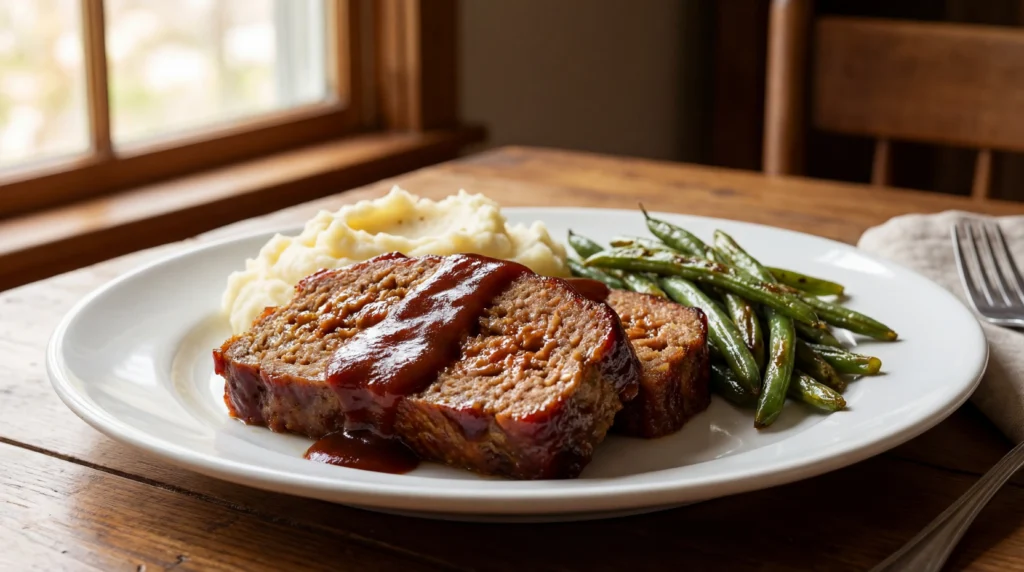
This guide walks you through a straightforward, old‑school meatloaf recipe you can rely on any night of the week. You will see what to buy, how to mix everything without ending up with a dense brick, and exactly when to take it out of the oven so it stays moist and sliceable.
Table of Contents
What Makes a Classic Meatloaf Recipe?
The Essentials of a “Classic” Meatloaf
When people talk about a traditional meatloaf recipe, they usually mean a few simple things:
- Ground beef as the base, with enough fat to keep it juicy.
- A starchy binder such as breadcrumbs or crushed crackers soaked in milk.
- Eggs to hold everything together.
- Onion, a little garlic, and pantry sauces like ketchup and Worcestershire for flavor.
- A sweet‑tangy ketchup glaze baked on top.
You are not chasing a fancy restaurant dish here. You are building something honest and familiar that reheats well, slices neatly, and tastes even better the next day.
Why This Meatloaf Recipe Works Reliably
Two things decide whether your meatloaf turns out tender or dry: the ratio of fat to lean in the meat and the level of moisture inside the mixture. Using ground beef that is around 80–85% lean gives you enough fat to keep the loaf moist without turning greasy. Soaking your crumbs in milk first (a panade) traps liquid and stops the meat from squeezing it all out as it cooks.
The last piece of the puzzle is temperature. When the center of the loaf reaches about 160°F / 71°C, the meat is fully cooked and safe to eat, but it is still juicy if you let it rest before slicing.
Classic Meatloaf Recipe Ingredients
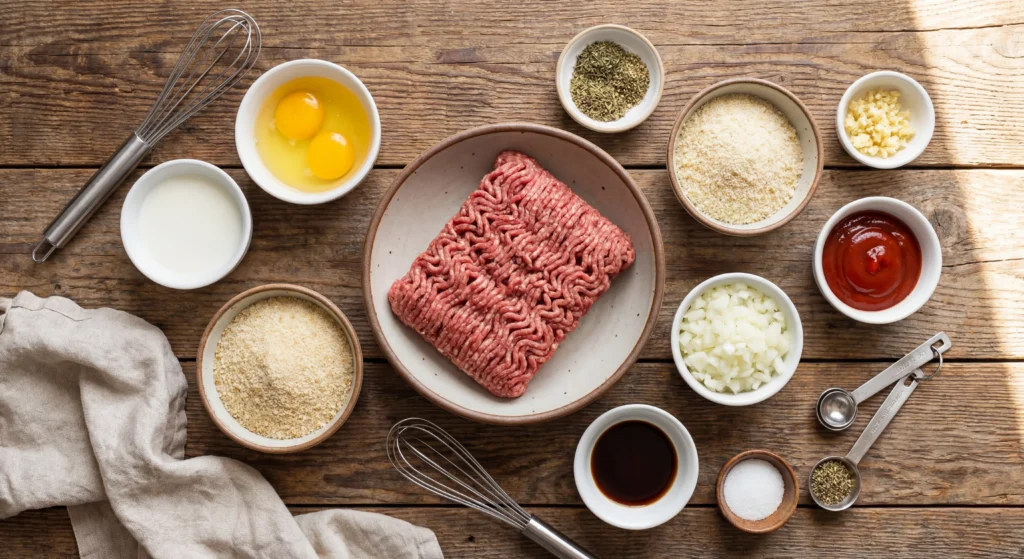
Main Meatloaf Ingredients
Use this table as your shopping list for one family‑sized loaf (about 6–8 servings):
Glaze Ingredients
The glaze is what gives a classic meatloaf recipe its shiny, flavorful crust.
| Glaze ingredient | Amount | Role |
|---|---|---|
| Ketchup | ½–¾ cup | Base for a sweet‑tangy topping |
| Brown sugar | 1–2 tbsp | Caramelizes and adds sweetness |
| Mustard or Worcestershire | 1–2 tsp | Balances sugar with acidity and depth |
Stir the glaze until smooth so it spreads easily and bakes into a sticky layer.
Step‑by‑Step: How to Make This Classic Meatloaf Recipe
Step 1 – Soak the Crumbs (Panade)
Add your breadcrumbs or crushed crackers to a mixing bowl. Pour the milk over them and let the mixture sit for 5–10 minutes. The crumbs swell and soften, forming a thick paste. This panade behaves like a sponge inside the loaf, holding moisture and preventing the meat from tightening too much as it bakes.
If the mixture looks very dry after a few minutes, add a splash more milk; if it is soupy, add a spoonful of crumbs until you get a soft, spreadable texture.
Step 2 – Soften the Aromatics
Raw onion can stay sharp if you mix it straight into the meat. To avoid biting into harsh pieces, cook the onion gently in a little oil over medium heat until it turns translucent and sweet. Add the garlic near the end so it does not burn. Let the mixture cool for a few minutes before combining it with the eggs.
This one step gives your meatloaf a smoother texture and a more rounded flavor.
Step 3 – Build the Meatloaf Base
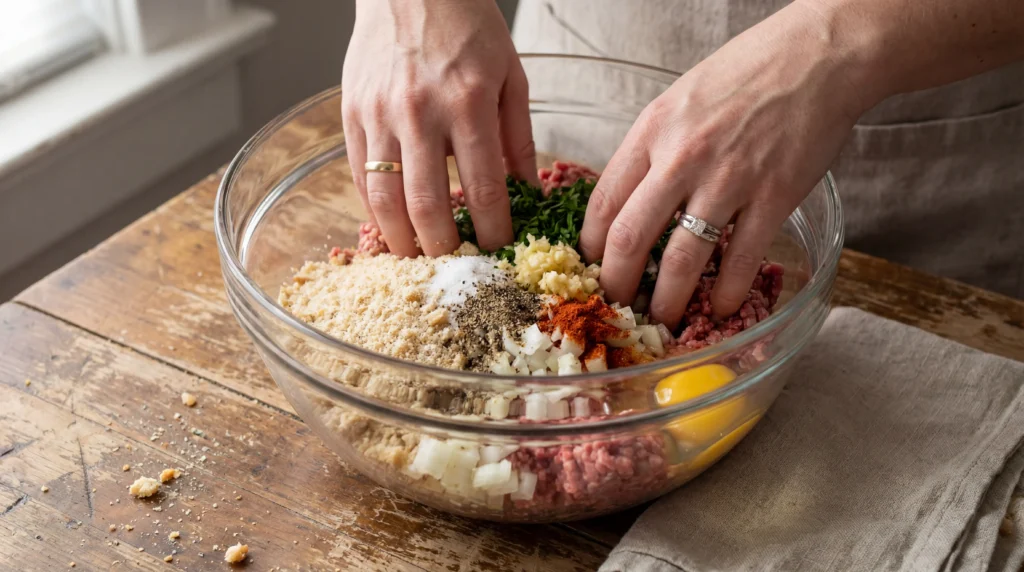
In a large bowl, whisk the eggs with salt, pepper, ketchup, Worcestershire, and your dried herbs. Add the cooled onion and garlic plus the panade and stir until everything is evenly combined.
Now add the ground beef. Use your hands with fingers slightly spread and fold the meat into the mixture. You want to distribute the ingredients without squeezing the meat. Overworking the mixture is a common reason meatloaf feels dense and rubbery instead of tender. Stop mixing as soon as no dry patches remain.
Step 4 – Shape and Glaze
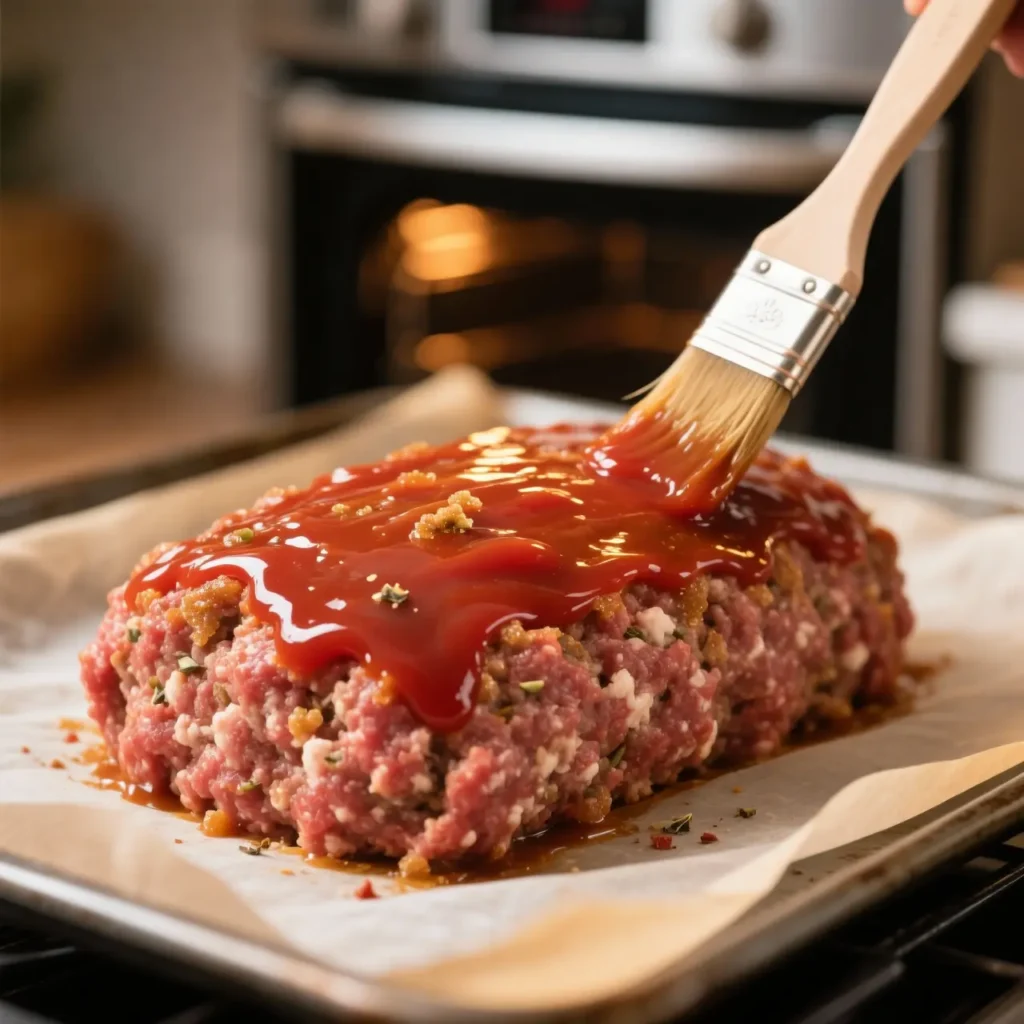
You can either:
- Pack the mixture into a loaf pan for a very moist meatloaf that bakes in its own juices, or
- Shape it into a free‑form loaf on a lined baking sheet if you prefer more browned edges.
Smooth the top with damp hands. Spread about half of your glaze over the top and sides. Keep the rest for later to create a thick, glossy finish.
Step 5 – Bake to the Right Meatloaf Temperature
Heat your oven to 350°F / 175°C. Place the meatloaf on the center rack. Baking time usually ranges between 45 and 60 minutes, depending on the size and thickness of your loaf.
From about the 35‑minute mark, start checking:
- Brush on the remaining glaze for the final 10–15 minutes so it can bubble and set.
- Use an instant‑read thermometer in the center of the loaf. When it reads close to 160°F / 71°C, your meatloaf is safely cooked but still juicy.
Avoid guessing by color alone; the glaze and surface can brown faster than the center cooks through.
Step 6 – Rest, Slice, and Serve
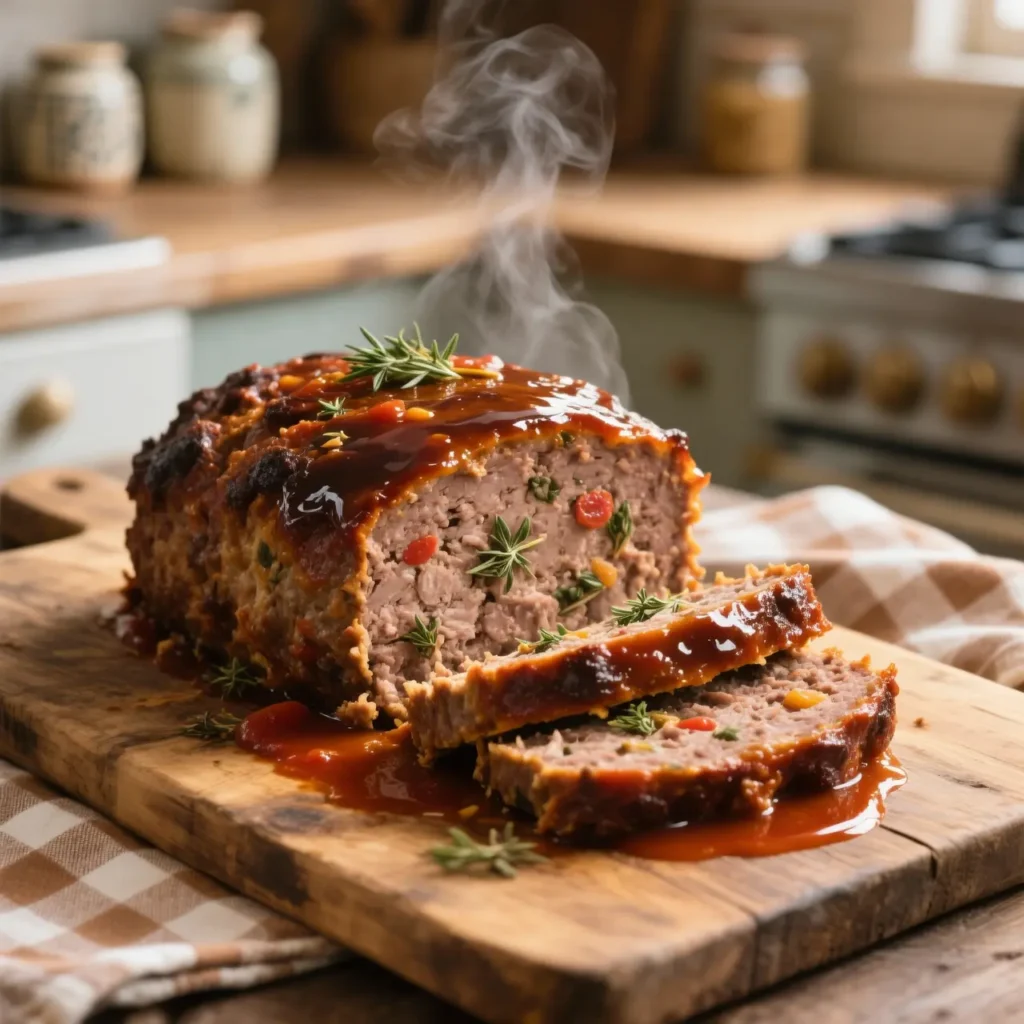
Once the meatloaf hits the target temperature, remove it from the oven and tent it loosely with foil. Let it rest for about 10–15 minutes. This pause lets the juices redistribute instead of spilling out when you cut into it.
Use a sharp knife to slice thick, even pieces. A wide spatula helps you transfer slices to plates without breaking them.
Pro Tips for the Best Meatloaf Recipe
Choose the Right Meat
If you go too lean, your meatloaf will dry out quickly. Beef in the 80–85% lean range usually gives the best balance. You can also mix in a bit of ground pork for extra tenderness if you enjoy that flavor.
Avoid Common Meatloaf Mistakes
Keep these points in mind while you cook:
- Do not skip the panade. Dry crumbs alone soak up liquid instead of holding it.
- Season generously. Without enough salt and pepper, even the best meatloaf recipe tastes flat.
- Mix gently. Think of folding rather than kneading; once the mixture looks uniform, stop.
- Trust the thermometer. Taking the loaf far past 160°F / 71°C is the quickest way to lose moisture.
Simple Variations You Can Try
Once you are comfortable with the base recipe, you can play with small changes:
- Stir shredded cheese into the mixture or sprinkle some near the center before shaping the loaf.
- Swap regular breadcrumbs for gluten‑free crumbs or quick oats if you need a gluten‑free meatloaf recipe.
- Use ground turkey or chicken with the same method, but cook to at least 165°F / 74°C in the center.
Each variation keeps the spirit of a classic meatloaf recipe while adjusting flavors to your taste.
What to Serve With Your Classic Meatloaf Recipe
Traditional Side Dishes
A classic meatloaf dinner almost builds itself. You can pair slices with:
- Creamy mashed potatoes or oven‑roasted potatoes.
- Steamed or sautéed green beans, peas, or carrots for color and freshness.
- A crisp green salad or coleslaw to cut through the richness.
Keeping the sides simple lets the meatloaf stay the star of the plate.
How to Store, Freeze, and Reheat Meatloaf
One of the strengths of this dish is how well it behaves as leftovers:
- In the fridge, tightly covered slices keep well for about 3–4 days.
- For longer storage, freeze individual slices or a whole cooled loaf for up to a few months. Wrap them well to avoid freezer burn.
- To reheat, use a moderate oven and cover the meatloaf so it warms through gently without drying out. You can brush on a little extra ketchup if the surface looks dull.
Leftover slices make excellent sandwiches the next day with a bit of mayo, mustard, or extra glaze.
Classic Meatloaf Recipe FAQ
What meat‑to‑fat ratio should you use for a classic meatloaf recipe?
For most home ovens, ground beef that is around 80/20 or 85/15 works best. You get enough fat to keep the meatloaf juicy, but not so much that the pan fills with grease.
How long do you cook a meatloaf recipe, and at what temperature?
Baking at about 350°F / 175°C for 45–60 minutes is typical for a 1.5–2 lb loaf. Rather than watching the clock, use a thermometer and remove the loaf when the center hits 160°F / 71°C.
How can you stop your meatloaf recipe from falling apart?
Make sure you use enough binder (soaked crumbs plus eggs), pack the loaf firmly but not too tightly, and let it rest before slicing. Cutting into it while it is piping hot is a common reason slices crumble.
Can you prepare this meatloaf recipe ahead of time?
You can mix and shape the loaf a day in advance, cover it, and chill it in the fridge. When you are ready to cook, add a few extra minutes of baking time because it starts cold. You can also bake it fully, chill it, and reheat slices when you need a fast dinner.
What temperature is safe for a chicken or turkey meatloaf recipe?
If you switch to poultry, you should cook the loaf until the center reaches at least 165°F / 74°C. This higher temperature is important for food safety with ground chicken or turkey.
Conclusion: Make This Meatloaf Recipe Your Own
A classic meatloaf recipe is less about strict rules and more about a few good habits: choosing the right meat, treating the mixture gently, and paying attention to temperature. Once you go through the steps a couple of times, you will recognize how the mixture should look and how the loaf should feel when it is done.
Use this guide as your starting point, then adjust the glaze, the herbs, or the side dishes until this meatloaf tastes exactly the way you want your home to feel at dinnertime. When you try it, share your version, your tweaks, and your questions with other home cooks—your experience might be the nudge someone else needs to finally master their own classic meatloaf recipe.
Once you master this classic meatloaf recipe, you can move on to bolder versions like my Cracker Barrel meatloaf recipe for a diner‑style twist.