How to Make Delicious Salmon Patties at Home
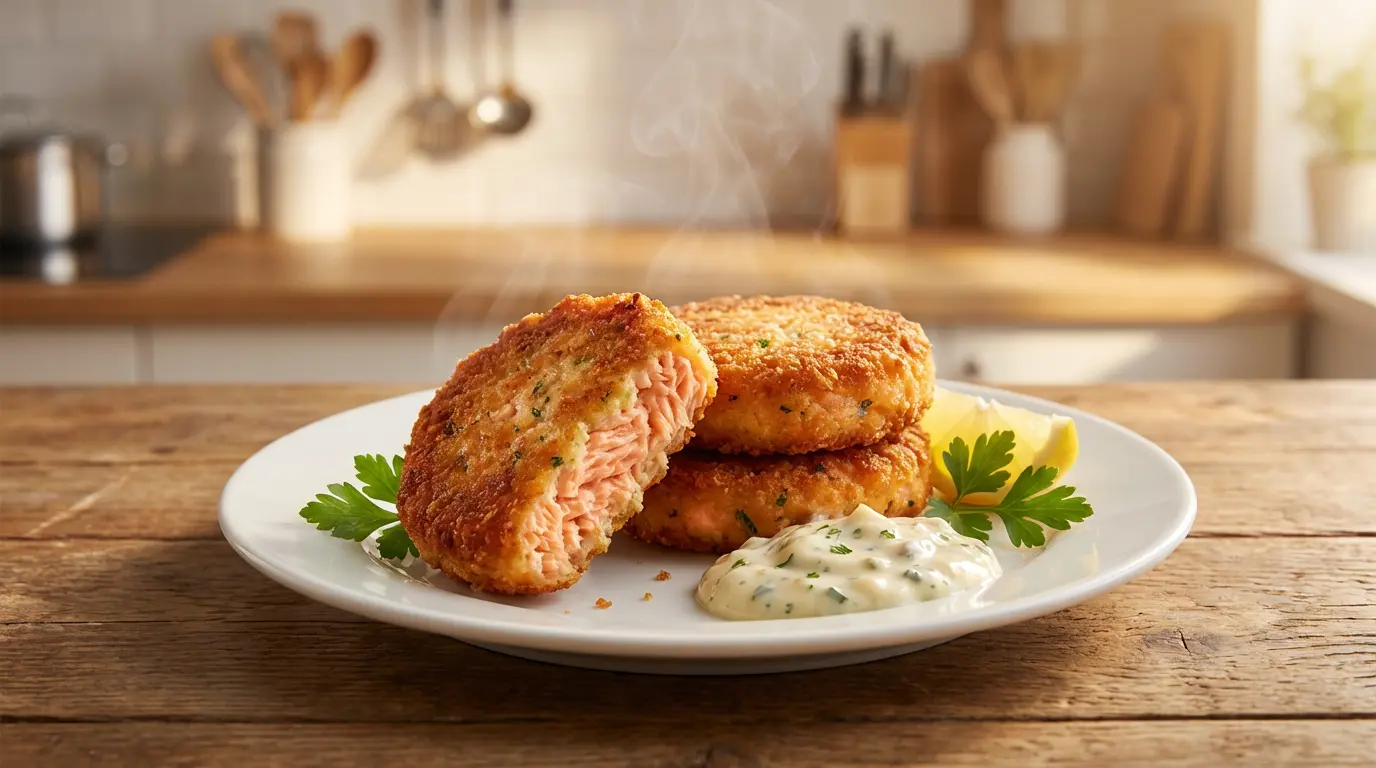
You don’t need a fancy fish counter or a long prep session to put something genuinely satisfying on the table. You just need a bowl, a pan, and a smart method for building salmon patties that stay together, brown beautifully, and taste like comfort food with a clean, bright finish.
Table of Contents
What makes salmon patties special
You’re turning simple salmon into a meal that hits three cravings at once: crisp edges, tender center, and that savory “I could eat one more” vibe. You can make salmon patties with canned salmon, leftover cooked salmon, or even freshly cooked fillets—so the recipe adapts to your week instead of demanding a perfect schedule.
You’ll also love how flexible they are. You can serve salmon patties as a main dish with sides, stack them into burgers, tuck them into wraps, or break them over salads for a lighter plate.
Choosing salmon for salmon patties
Your best salmon cakes start with the salmon you choose—and the choice depends on what matters most today: price, flavor, or convenience.
Canned salmon (fastest and most budget-friendly)
Canned salmon is the classic route because it’s already cooked and easy to flake. You can use pink or sockeye; sockeye tends to taste richer and look deeper in color, while pink is milder and often cheaper.
What to look for:
- Cans labeled “wild” if you prefer stronger flavor.
- Salmon packed in water if you want cleaner taste (oil-packed can be richer but heavier).
Skin and bones?
Many cans include soft bones and bits of skin. You can remove them, or you can mash the bones right in. If you mash them well, they practically disappear and add calcium.
Leftover cooked salmon (best texture)
If you’ve got leftover baked or grilled salmon, your patties can taste more “fresh-cooked” and less “pantry-style.” The key is not to overmix; you want flakes, not paste.
Fresh salmon (when you want to go all-in)
Fresh salmon is great, but you’ll need to cook it first, cool it, then flake. If you’re already cooking salmon for another meal, this becomes an easy “next-day upgrade.”
Essential ingredients (and why each one matters)
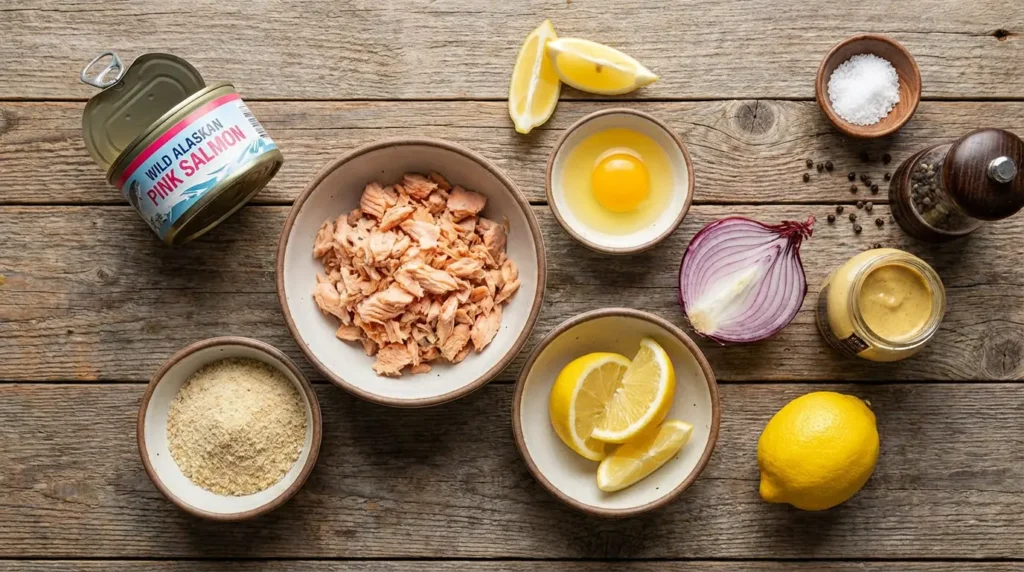
salmon fritters succeed when you balance four things:
- Salmon (the main body)
- Binder (holds it together)
- Seasoning (makes it craveable)
- Moisture control (prevents sogginess)
Classic fish patties ingredient table (base recipe)
| Ingredient | Amount (makes 6 patties) | Why you need it |
|---|---|---|
| Salmon (canned, drained) | 14–15 oz | The base protein |
| Egg | 1 large | Primary binder |
| Breadcrumbs or cracker crumbs | 1/2 cup (plus extra if needed) | Structure + crisping |
| Onion (very finely minced) | 2–4 tbsp | Sweet-savory depth |
| Lemon juice | 1 tbsp | Brightness, balances richness |
| Dijon mustard or mayo (optional) | 1 tbsp | Moisture + flavor |
| Salt | 1/2 tsp (adjust) | Seasons the interior |
| Black pepper | 1/4 tsp | Light heat |
| Oil for frying | 2–4 tbsp | Browning + crisp crust |
Smart swaps you can use:
- Breadcrumbs → panko for extra crunch
- Egg → 2 tbsp mayo + 1 tbsp yogurt (works when eggs run out)
- Onion → green onion for a cleaner bite
- Lemon juice → pickle brine for tang and “deli” flavor
Tools that make salmon patties easier
You can make salmon croquettes with basic kitchen tools, but a few items make the job smoother:
- Nonstick or cast-iron skillet (both work; cast iron browns harder)
- Fish spatula (prevents crumbling during flipping)
- Cookie scoop or 1/3 cup measure (keeps patties evenly sized)
- Wire rack (keeps crust crisp after frying)
- Instant-read thermometer (optional, but helpful for consistency)
Step-by-step: how to make these patties at home (the master method)
This is the method you can repeat with confidence, even when you change flavors.
Step 1 — Drain, flake, and “texture check”
Drain your salmon well. If you’re using canned salmon, press out extra liquid with a fork. If you’re using leftover salmon, make sure it’s cooled and flaked into chunks.
Texture target: You want a mix of flakes and smaller bits. Too chunky and it won’t bind; too smooth and you’ll get dense patties.
Step 2 — Build the mix (without turning it into paste)
In a bowl, combine:
- salmon
- egg
- crumbs
- onion
- lemon juice
- seasonings
Mix gently with a fork or your hands. Stop as soon as the mixture holds together when squeezed.
Quick test: Grab a small handful and press it.
- If it holds: you’re ready.
- If it falls apart: add 1–2 tbsp crumbs.
- If it feels dry and cracks: add 1 tbsp mayo or a splash of water.
Step 3 — Shape evenly and chill (the underrated secret)
Divide into 6 patties, about 3/4-inch thick. Place on a plate and chill 15–20 minutes.
Chilling firms the binder and makes flipping easier, especially if you’re using a lot of onion, herbs, or add-ins.
Step 4 — Pan-fry for a golden crust
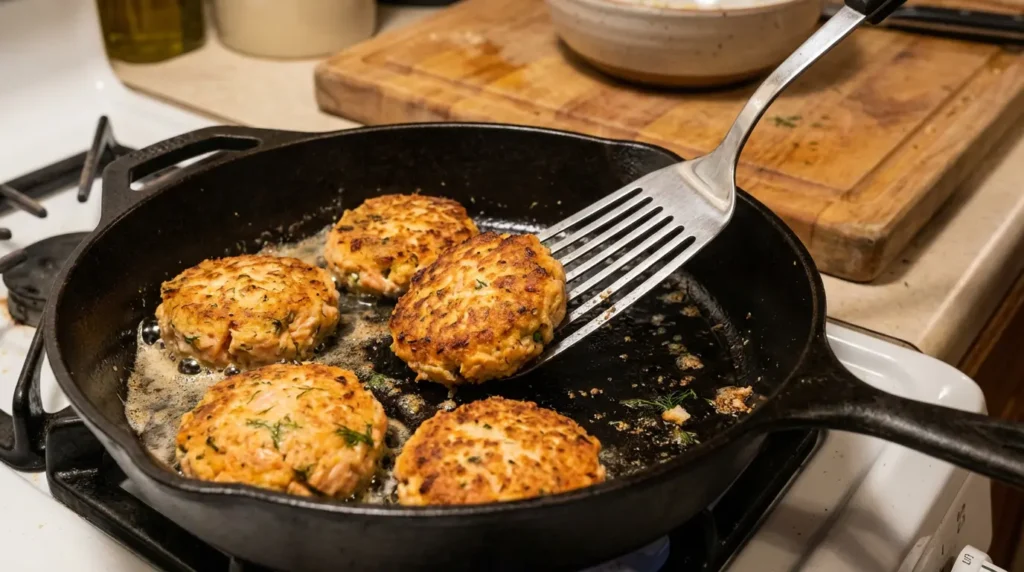
Heat a skillet over medium heat. Add oil. When the oil shimmers, place patties in the pan.
Cook 3–4 minutes per side. Flip once—don’t press them down, or you’ll squeeze out moisture and risk cracking.
Step 5 — Drain correctly so they stay crispy
Move patties to a wire rack (not paper towels). Paper towels trap steam and soften the crust.
Food safety note (simple and practical)
If you’re cooking patties from raw fish (rare, but possible if you cook fresh salmon yourself inside the patty mix), cook fish to a safe internal temperature of 145°F (63°C) per FDA guidance.
If you’re using canned salmon, it’s already cooked, so you’re mainly cooking for texture and browning.
5 flavor variations you can rotate all month
Once you understand the base, you can change the vibe with one or two ingredient swaps.
1) Classic diner-style this recipe
- Add: 1 tbsp mayo + 1 tsp Worcestershire-style sauce
- Serve with: lemon wedge + simple tartar
2) Lemon-dill salmon patties (bright and fresh)
- Add: 1–2 tbsp chopped dill, extra lemon zest
- Best side: cucumber salad or roasted asparagus
3) Spicy Cajun the patties
- Add: Cajun seasoning + pinch of cayenne
- Sauce: yogurt + hot sauce + lime
4) Asian-inspired salmon patties
- Add: grated ginger, green onion, splash of soy sauce
- Dip: sesame mayo or sweet chili sauce
5) Cheesy the salmon mixture (kid-friendly)
- Add: 1/3 cup shredded cheddar
- Tip: reduce salt slightly—cheese brings its own.
Cooking methods: pan-fry vs bake vs air fry (choose your style)
Pan-frying (crispiest)
Pan-frying gives you the strongest crust and the most “restaurant” finish.
Best practices:
- Medium heat (too high browns outside before the center warms)
- Enough oil to coat the pan (shallow fry, not deep fry)
- Flip once, gently
Baking (lowest-effort)
Baking works when you want less oil and more hands-off cooking.
How to bake:
- Heat oven to 425°F (220°C)
- Brush a sheet pan with oil
- Bake 10–12 minutes, flip once, bake 6–8 minutes more
Crisp booster: Broil 1–2 minutes at the end (watch closely).
Air fryer (fast + crisp with less oil)
Air fryer the salmon mixture are great when you want crunch without much oil.
How to air fry:
- Preheat to 390–400°F
- Light oil spray on patties
- Cook 8–10 minutes, flipping halfway
Sauces that make salmon patties feel “finished”
A good sauce turns salmon patties into a full experience. You can keep it simple or make it bold.
Quick sauce ideas (2-minute versions)
- Lemon-dill yogurt: Greek yogurt + dill + lemon + salt
- Classic tartar shortcut: Mayo + relish + lemon
- Spicy mayo: Mayo + sriracha + lime
- Garlic herb sauce: Mayo + grated garlic + parsley
Salmon patties burger build
If you want salmon patties that feel like a real “meal,” build a burger:
- Bun + lettuce + patty + pickles + sauce
- Add tomato only if you eat immediately (it softens the bun fast)
Serving ideas that don’t feel repetitive
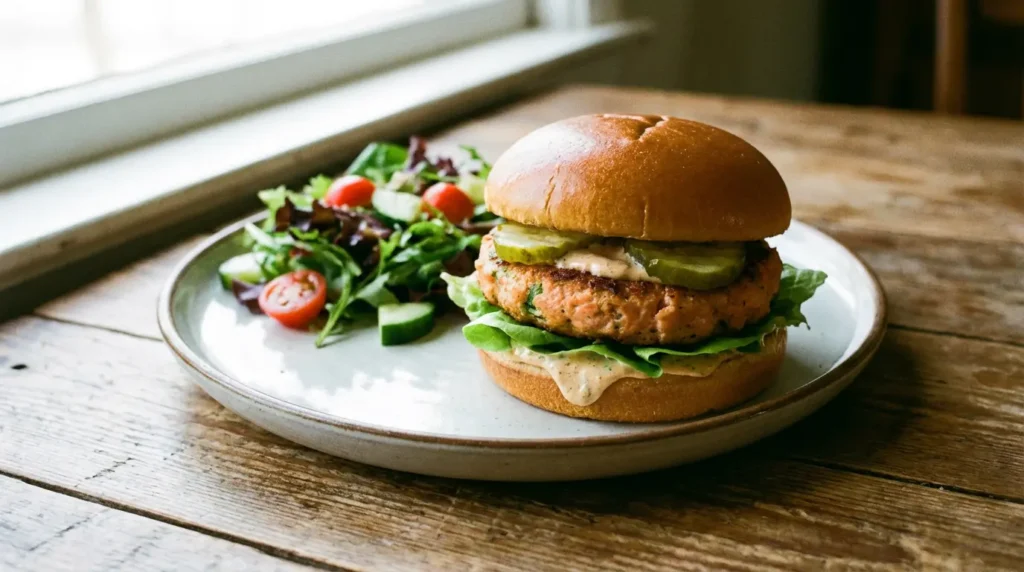
You’ll get more mileage when you serve salmon patties in different “formats.”
- Dinner plate: salmon patties + mashed potatoes + green veg
- Salad bowl: salmon patties over greens + vinaigrette
- Wrap: tortilla + slaw + spicy sauce + patty
- Breakfast twist: salmon patty + fried egg + hot sauce
Make-ahead, meal prep, and freezing salmon patties
Make-ahead mix (same day)
You can mix and shape salmon patties up to 8 hours ahead. Keep them covered in the fridge.
Pro move: Put patties on parchment so they lift easily.
Freezing (best for busy weeks)
Freeze uncooked patties on a tray until firm, then store in a freezer bag with parchment between layers.
Cook from frozen:
- Pan-fry on lower heat a bit longer, or
- Bake/air fry until heated through and crisp
Storage and reheating (keep the crust, avoid the stink)
Cooked fish is best eaten quickly, but you can store it safely if you cool and seal it fast. Ask USDA notes cooked fish and seafood can be stored in the refrigerator for 3 to 4 days.
Best reheating methods
- Oven: 300°F, 10–15 minutes on a rack (best for crisp)
- Air fryer: 350–375°F, 3–5 minutes
- Skillet: a small splash of oil, medium heat, flip once
Avoid microwaving if crispness matters. If you must, use low power and cover loosely.
Troubleshooting: why salmon patties fail (and how you fix it fast)
“My salmon patties fall apart”
Most often, the mixture is too wet or not chilled.
Fix:
- Add 1–2 tbsp crumbs
- Chill 20 minutes
- Flip only once
“My salmon patties are dry”
This happens when there isn’t enough moisture or fat in the mix.
Fix:
- Add 1 tbsp mayo or yogurt
- Use a bit more onion (very finely minced)
- Don’t overcook on high heat
“My salmon patties taste bland”
Salmon patties need brightness and salt inside the mix, not just on top.
Fix:
- Add lemon zest
- Add Dijon
- Add a pinch more salt (taste a tiny bit of the mix if you’re using canned cooked salmon)
“They’re brown but not crispy”
Usually the heat is too low, or you’re draining on paper towels.
Fix:
- Raise heat slightly (medium, not high)
- Drain on a rack
- Use panko for more crunch
FAQ: Salmon Patties
What’s the best salmon for salmon patties?
You can use canned salmon for the easiest salmon patties, or leftover cooked salmon for a fresher taste and flakier texture.
How do you keep salmon patties from falling apart?
You keep salmon patties together by draining the salmon well, using enough binder (egg/mayo), adding crumbs until the mix holds, and chilling the patties before frying.
Can you bake salmon patties instead of frying?
Yes. Baked salmon patties work great at 425°F on an oiled pan, flipped once, with a short broil at the end for extra browning.
How do you store leftover salmon patties?
Store salmon patties in an airtight container in the refrigerator, and use them within 3–4 days for best safety and quality.
What temperature should salmon patties reach?
If you’re cooking fish from raw, cook to 145°F (63°C) for safety
Conclusion: you can make salmon patties your signature meal
Once you nail the base ratio—salmon, binder, crumbs, seasoning—you stop “hoping” they work and start making salmon patties on demand. You’ll be able to adjust texture in seconds, switch flavors without stress, and serve them as comfort food, meal prep, or party bites.
Now pick your first version: classic crispy, lemon-dill fresh, or spicy Cajun. Cook them this week, then come back and share what you changed—your tweaks can help the next cook win too.