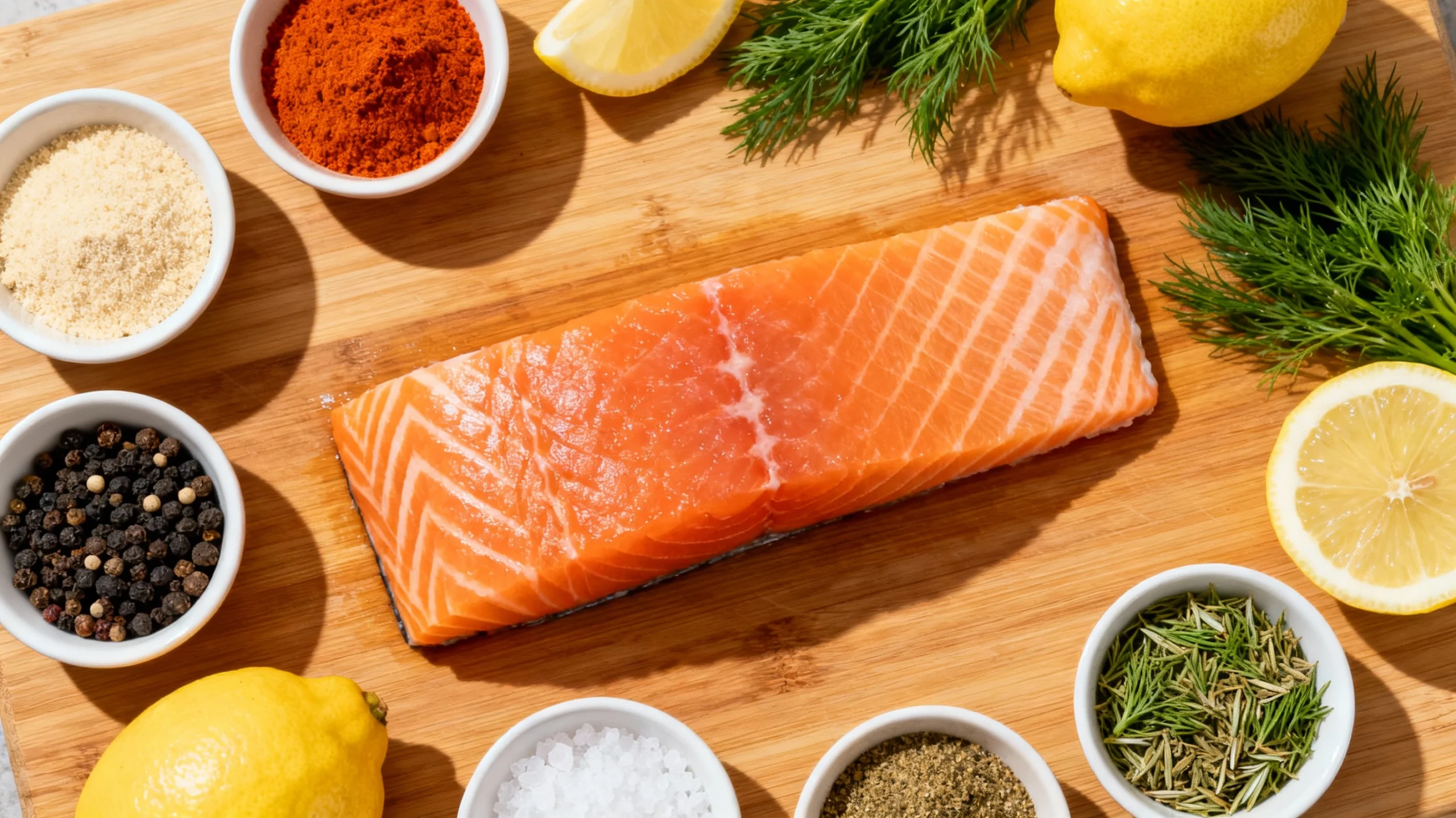
What are the best spices for salmon?
You know those nights when you’re standing in the kitchen, salmon fillet in hand, staring at your spice rack and thinking, “What actually belongs on this?”
You don’t want bland fish, and you don’t want to drown it in random seasonings either. What you really want is that sweet spot: salmon that tastes bright, balanced, and restaurant‑level good without a lot of effort.
The good news is that salmon is one of the most forgiving fish you can cook. Its naturally rich, buttery flavor pairs beautifully with a wide range of spices, herbs, and blends. Once you understand which flavors work best—and how to use them—you can turn a simple fillet into dozens of different meals just by changing the seasoning.
This guide walks you through the best spices for salmon, how to combine them, and how to use them for baking, grilling, pan‑searing, or air‑frying. You’ll see ready‑to‑use spice mixes, ingredient tables, and practical tips that fit real weeknight cooking.
Table of Contents
Understanding Salmon’s Flavor Profile and Why Spices Matter
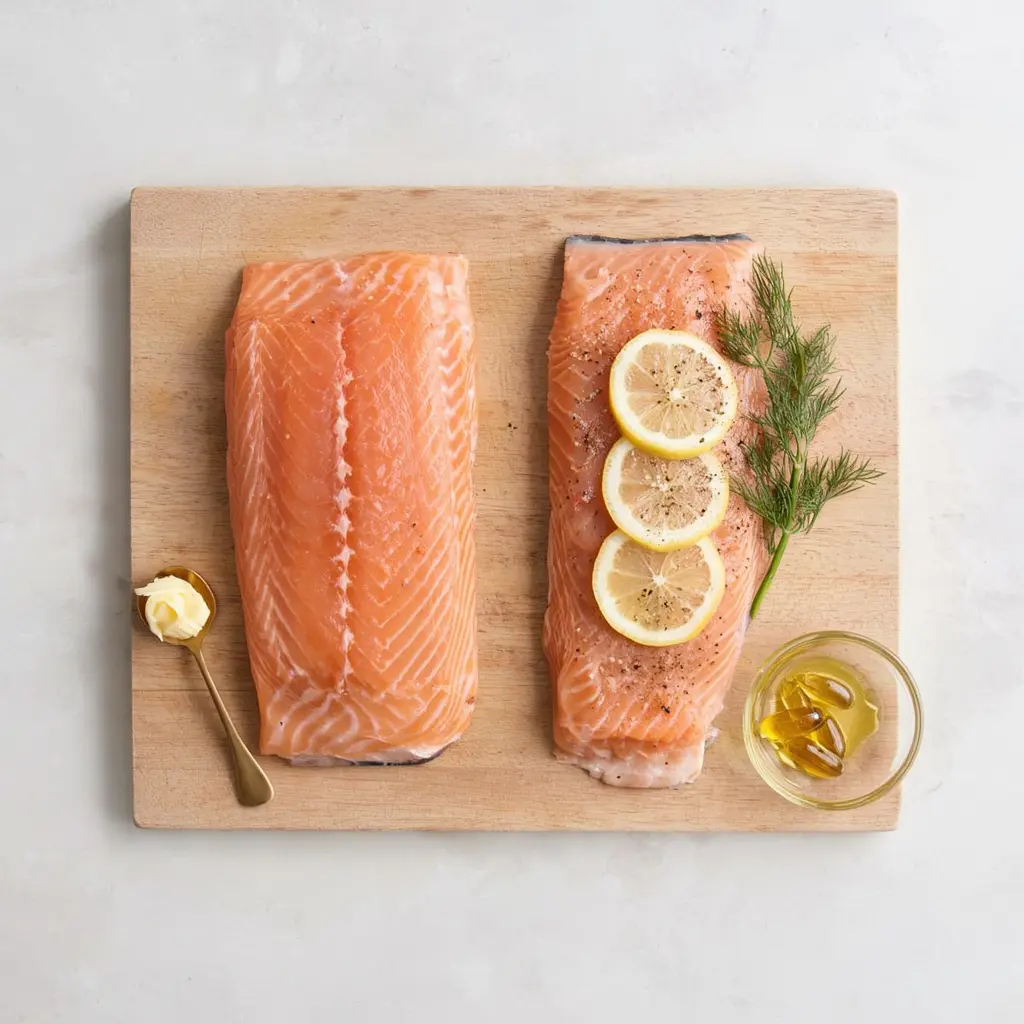
Before you reach for a single jar, it helps to know what you’re actually seasoning.
Salmon has:
- A naturally rich, fatty texture from its omega‑3 content
- A slightly sweet, clean flavor when it’s fresh
- Enough body to handle both delicate herbs and bolder spices
Fattier varieties (like king or Atlantic salmon) can carry strong spices such as smoked paprika or curry. Leaner or wild salmon (like sockeye) often shines with lighter touches—lemon, dill, fresh herbs.
Why Seasoning Is Essential for Good Salmon
The right spice pairing does three important things for you:
- Balances richness – Acidic and aromatic ingredients (lemon, vinegar, herbs) cut through the natural oiliness.
- Masks “fishy” notes – Garlic, ginger, and citrus help keep flavors clean and bright.
- Adds complexity – A simple fillet suddenly tastes layered, like something you’d order at a good restaurant.
Spices don’t just make salmon taste better; they also add their own nutritional benefits. Salmon is already a heart‑healthy choice thanks to its omega‑3 fats (the American Heart Association recommends fatty fish twice a week). Spices like garlic, ginger, and turmeric bring anti‑inflammatory and antioxidant compounds of their own, so you build flavor and nutrition at the same time.
Core Flavor Families That Complement Salmon
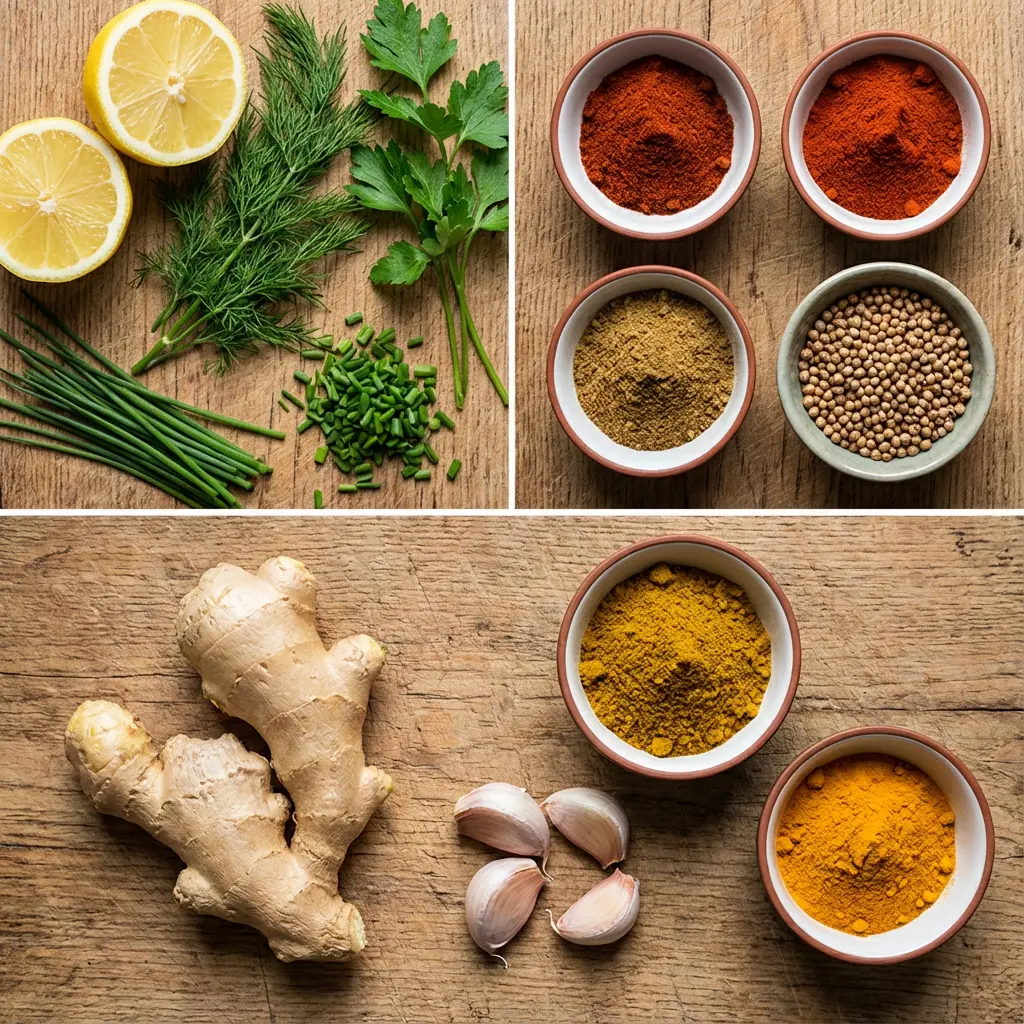
Instead of thinking only in individual spices, it helps to think in flavor families. When you know the direction you want—fresh and bright, smoky and bold, or warmly spiced—you can pick from the right group.
Fresh Herbs and Citrus for Bright, Clean Salmon
If you like salmon to taste light and refreshing, these are your go‑to choices:
- Herbs
- Dill
- Parsley
- Chives
- Tarragon
- Citrus
- Lemon zest and juice
- Lime
- Orange zest for a subtle sweetness
This combination works especially well for:
- Baked salmon fillets
- Poached salmon
- Salmon salads and cold platters
A simple mix of lemon, dill, salt, and pepper can take you very far.
Smoky and Savory Spices for Bold Salmon Dishes
When you want salmon that tastes hearty and robust—great for tacos, rice bowls, or the grill—lean on these spices:
- Smoked paprika
- Regular sweet paprika
- Ground cumin
- Ground coriander
These pairings are ideal for:
- Grilled or broiled salmon
- Blackened salmon
- Salmon tacos or burrito bowls
Warming and Aromatic Spices for Global Salmon Flavors
If you love dishes inspired by Asian, Indian, or Middle Eastern cooking, you can lean into warming aromatics:
- Fresh or ground ginger
- Garlic (fresh or powder)
- Turmeric
- Curry powder
- Garam masala
Use these for:
- Soy‑ginger or miso‑glazed salmon
- Coconut curry salmon
- Spiced Mediterranean and Middle Eastern salmon plates
The 10 Best Spices for Salmon (and How to Use Them)
Here are the heavy hitters—the spices and herbs you’ll reach for again and again when you cook salmon.
1. Garlic (Fresh or Powder)
Garlic is one of the best spices for salmon because it adds instant savory depth.
- Use fresh minced garlic in marinades, glazes, or compound butter.
- Use garlic powder when you want even coverage in a dry rub.
- Pairs well with almost everything: lemon, herbs, soy sauce, butter.
2. Dill
Dill and salmon are a classic pair for a reason.
- Brings a soft, grassy, slightly anise‑like flavor.
- Perfect with lemon, yogurt, sour cream, or mustard.
- Best for baked or poached salmon and for cold dishes like salmon salad or lox‑style plates.
3. Paprika and Smoked Paprika
Paprika gives color and gentle sweetness; smoked paprika adds a grill‑like flavor indoors.
- Regular paprika works well on baked or pan‑seared salmon.
- Smoked paprika shines on grilled, broiled, or blackened salmon.
- Combine with garlic, onion powder, and a bit of brown sugar for a BBQ feel.
4. Lemon Pepper
Lemon pepper is a convenient blend that adds citrus and heat in one shake.
- Great on busy nights when you don’t feel like mixing a rub.
- Works especially well in the oven or air fryer.
- Add a drizzle of olive oil to help it stick to the fish.
5. Black Pepper (Freshly Cracked)
Freshly cracked black pepper wakes up all the other flavors.
- Coarsely ground pepper can form a light crust on pan‑seared salmon.
- Use with salt and lemon for a very simple but reliable seasoning.
6. Cumin
Cumin adds a warm, earthy note that’s fantastic in tacos or Middle Eastern‑inspired dishes.
- Use sparingly; a little goes a long way.
- Combine with coriander, paprika, and chili powder for salmon rubs.
7. Coriander
Ground coriander has a subtle citrus flavor that brightens salmon.
- Works well with cumin and paprika.
- Especially good in Mediterranean or North African spice blends.
8. Ginger
Ginger gives salmon a lively, aromatic kick.
- Fresh ginger is vibrant and slightly spicy—ideal for soy‑ginger marinades and glazes.
- Ground ginger works in spice rubs or curry‑type seasonings.
9. Thyme and Rosemary
These woody herbs stand up to high heat and longer cooking.
- Great with roasted veggies and potatoes alongside salmon.
- Use dried thyme or rosemary in rubs; use fresh sprigs in the pan or on the baking sheet.
10. Chili Flakes and Cayenne
For a little heat, chili flakes and cayenne are hard to beat.
- Sprinkle lightly over salmon, then balance the heat with honey, maple syrup, or a citrus glaze.
- Essential in blackened salmon and spicy taco fillings.
Best Spice Blends and Dry Rubs for Salmon
To make your life easier, you can mix these spices into ready‑to‑use rubs and marinades. Here are a few that work brilliantly.
Classic Lemon Herb Salmon Seasoning
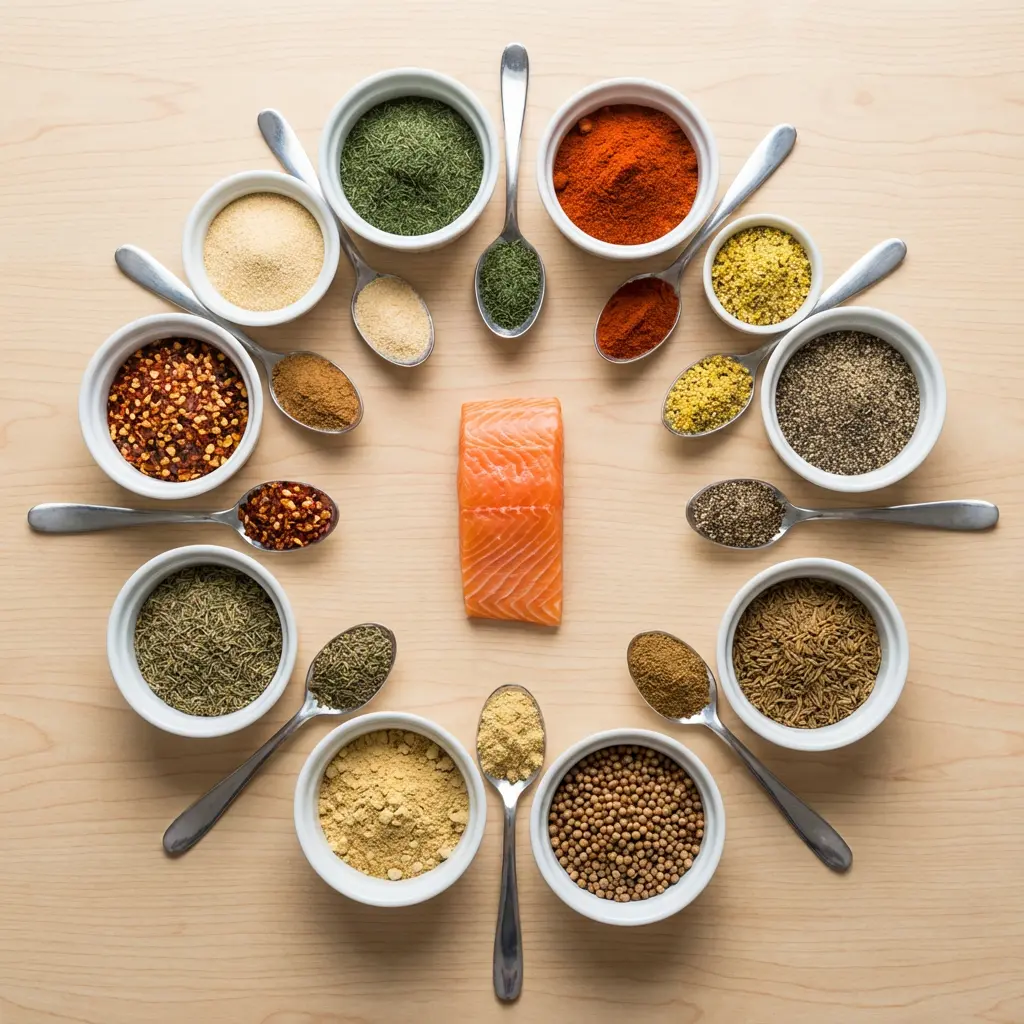
Bright and fresh, this is perfect for an easy baked salmon dinner.
Lemon Herb Dry Rub – Ingredient Table
| Ingredient | Amount |
|---|---|
| Lemon zest (finely grated) | 1 tbsp |
| Garlic powder | 1 tsp |
| Dried dill | 1 tsp |
| Dried parsley | 1 tsp |
| Salt | ¾ tsp |
| Black pepper | ½ tsp |
| Olive oil (for rubbing, not in mix) | 1–2 tbsp |
How to use it
- Pat your salmon dry.
- Rub lightly with olive oil.
- Sprinkle the lemon herb rub evenly over the fillets.
- Bake at 400°F (200°C) for 10–12 minutes, or until the fish flakes easily.
This blend gives you that “classic salmon with lemon and dill” flavor that works with rice, salad, or roasted potatoes.
Smoky Paprika and Garlic Salmon Rub
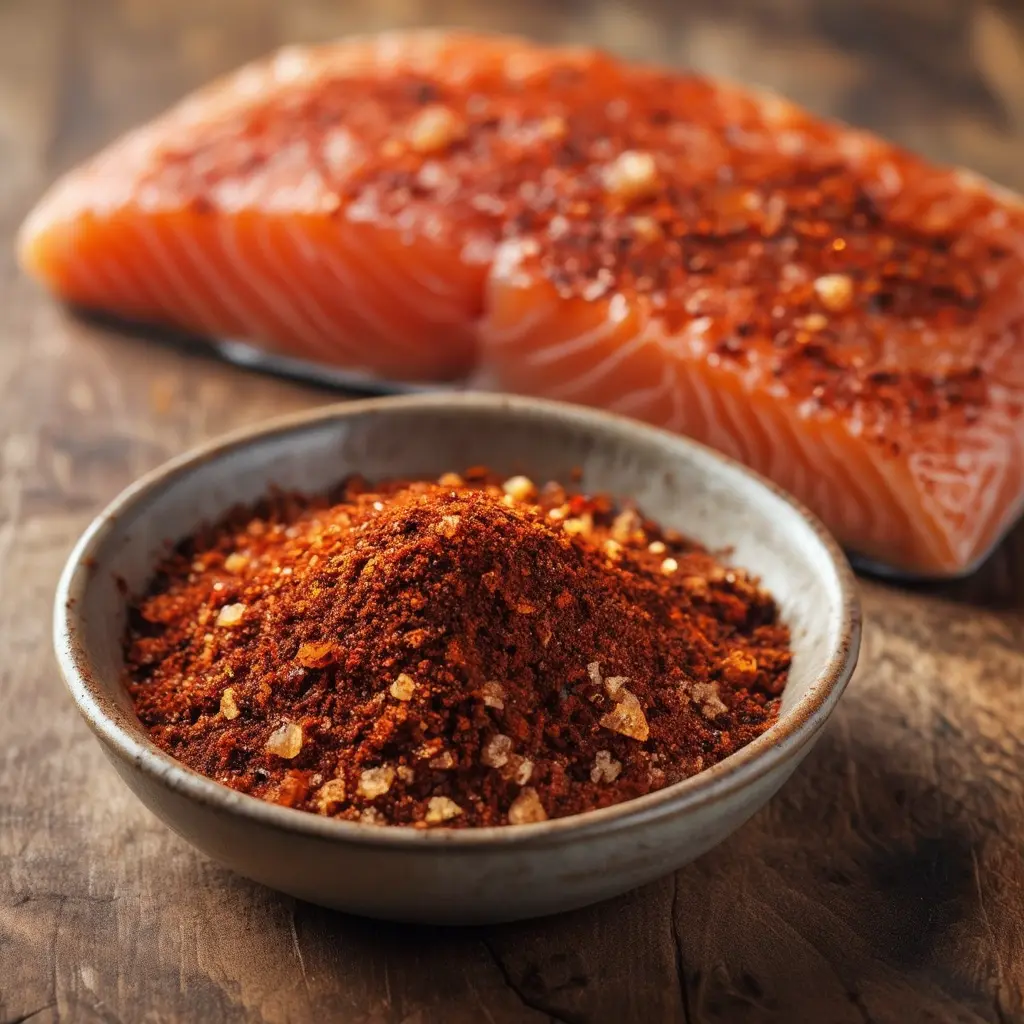
If you like a deeper, almost grilled flavor, this rub is one of the best spices for salmon combinations you can keep on hand.
Smoky Salmon Rub – Ingredient Table
| Ingredient | Amount |
|---|---|
| Smoked paprika | 2 tsp |
| Garlic powder | 1 tsp |
| Onion powder | 1 tsp |
| Ground cumin | ½ tsp |
| Brown sugar (optional) | 1 tsp |
| Salt | ¾–1 tsp |
| Black pepper | ½ tsp |
How to use it
- Massage onto salmon with a little oil.
- Grill or broil until the top is lightly charred at the edges.
- Keep an eye on it if you include sugar—sugar helps caramelize but can burn under a strong broiler.
Cajun / Blackened Salmon Seasoning
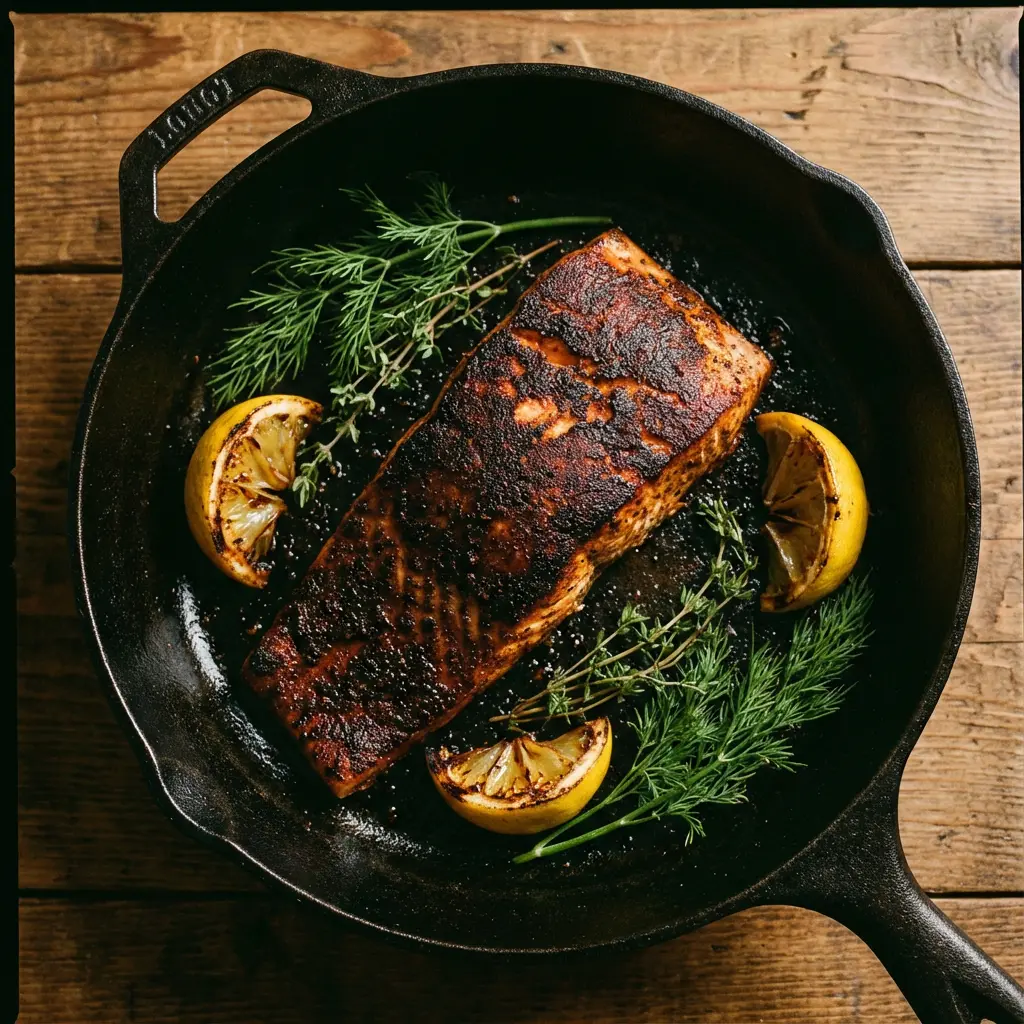
For bold, spicy salmon that’s perfect over rice, in tacos, or with mashed potatoes, Cajun seasoning delivers.
Common spices in a Cajun blend include:
- Paprika
- Cayenne pepper
- Garlic powder
- Onion powder
- Dried oregano
- Dried thyme
- Black pepper
You can buy a pre‑made Cajun seasoning or mix your own and adjust the heat level to your liking.
Asian‑Inspired Soy Ginger Salmon Marinade
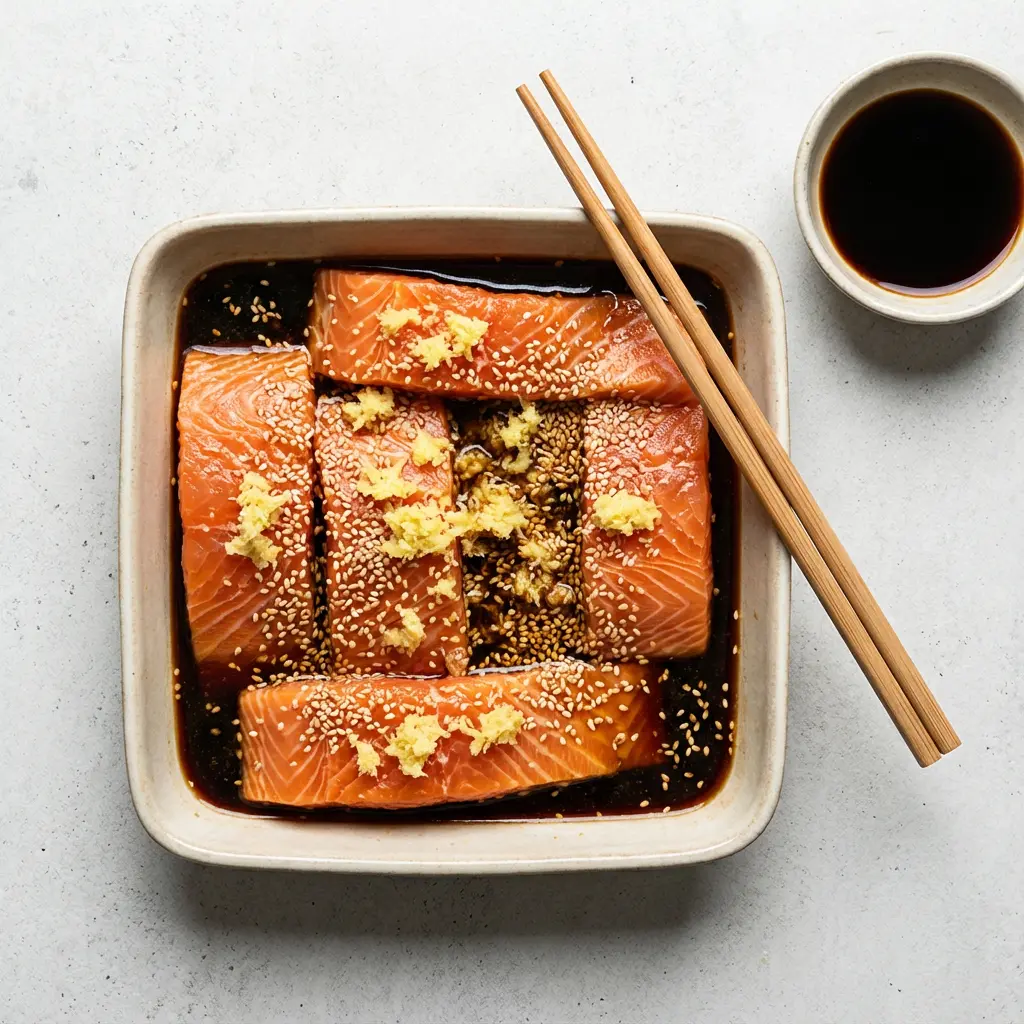
This marinade leans on ginger, garlic, and soy sauce—things you may already have in your pantry.
Soy Ginger Marinade – Ingredient Table
| Ingredient | Amount |
|---|---|
| Soy sauce (low‑sodium) | 3 tbsp |
| Fresh ginger, grated | 1 tbsp |
| Garlic, minced | 2 cloves |
| Honey or brown sugar | 1–2 tbsp |
| Sesame oil | 1 tsp |
| Rice vinegar or lime juice | 1 tbsp |
How to use it
- Whisk everything together.
- Marinate salmon for 15–30 minutes (no longer than an hour; acid can start to affect the texture).
- Bake, pan‑sear, or air‑fry, brushing with extra marinade (boiled first if reused) toward the end.
Mediterranean Herb and Spice Blend
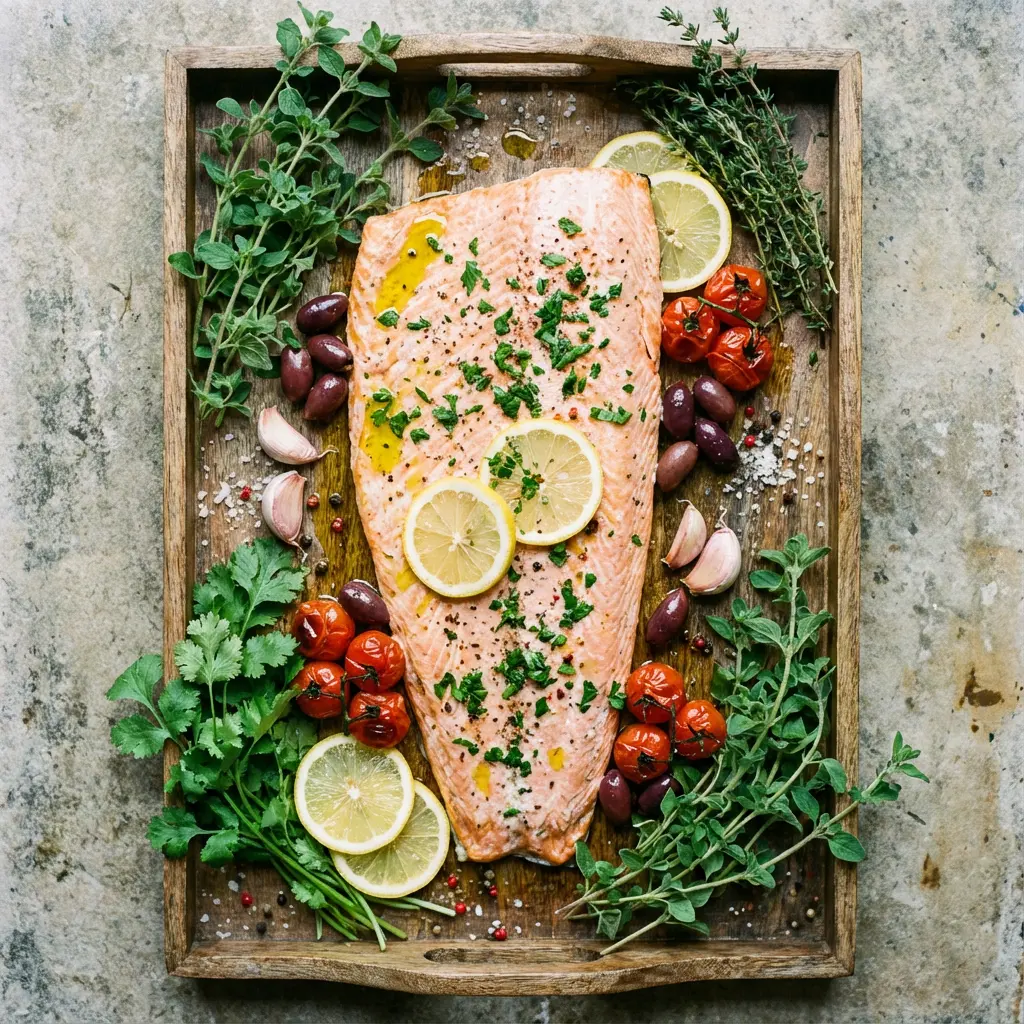
For a sunny, Mediterranean feel, use:
- Oregano
- Thyme
- Coriander
- Garlic powder
- Lemon zest
Serve this salmon with cherry tomatoes, olives, cucumber, and a sprinkle of feta.
How to Use Spices on Salmon for Different Cooking Methods
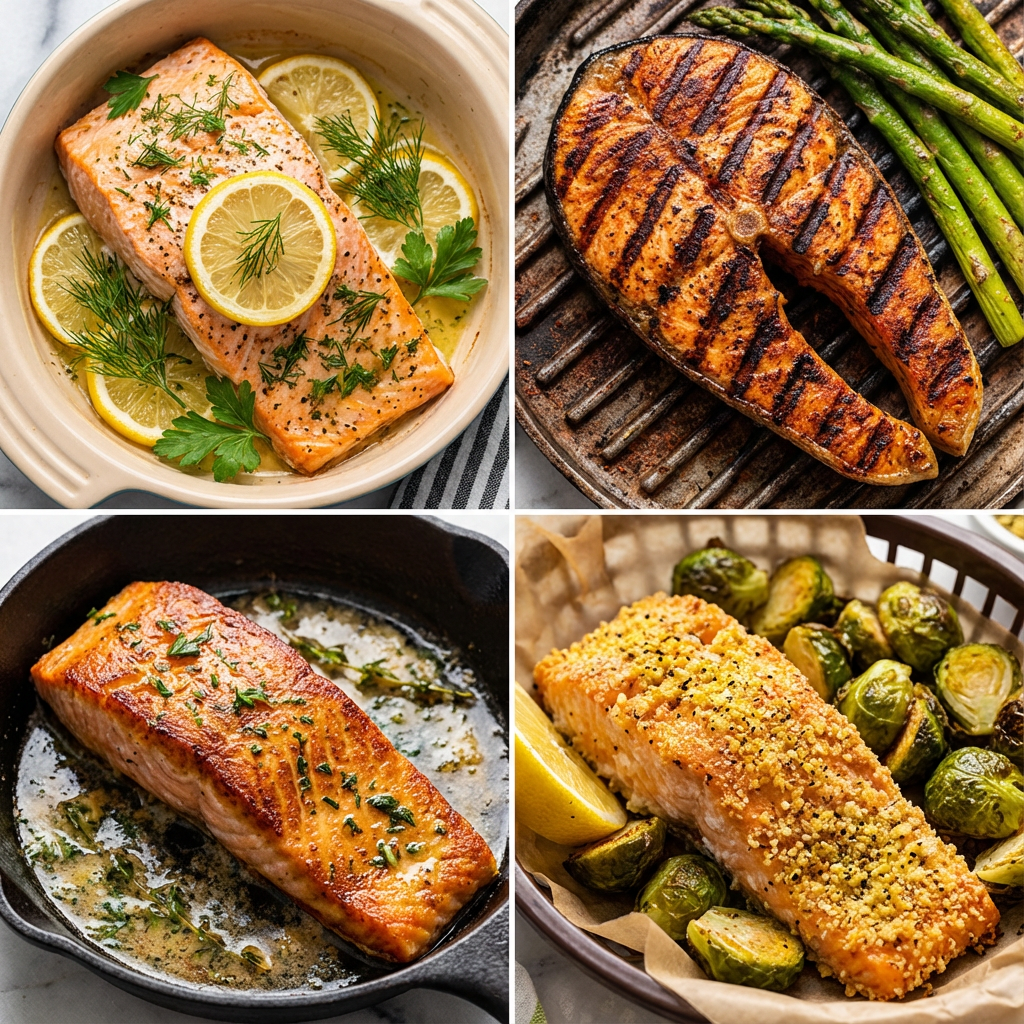
The best spices for salmon will only shine if you apply them the right way for how you cook the fish.
Seasoning Salmon for Baking and Roasting
Baking is one of the easiest methods, and it works with almost any spice blend.
- Pat the salmon completely dry so spices stick better.
- Rub with a thin coat of oil, then add salt and your chosen spices.
- If you’re using fresh herbs, sprinkle some after cooking so they stay bright and green.
Spicing Salmon for Grilling and Broiling
High heat brings big flavor, but it can also burn delicate ingredients.
- Choose robust spices: smoked paprika, chili powder, cumin, Cajun blends.
- Lightly oil the salmon and grill grates or use a grill basket.
- If your rub includes sugar, keep the fillets a little farther from direct flame and watch closely.
Seasoning for Pan‑Seared and Air‑Fried Salmon
Both methods give you crisp edges and juicy centers.
- Avoid very thick, sugary coatings—they burn faster in a hot pan or air fryer.
- Use a dry rub or a light drizzle of sauce at the end.
- For pan‑searing, let your fish come closer to room temperature and don’t crowd the pan; this helps develop a good crust.
Marinades vs. Dry Rubs on Salmon
Both have their place:
- Marinades
- Add moisture and deeper flavor.
- Work best when you marinate for a short time (15–45 minutes), especially with citrus or vinegar.
- Dry rubs
- Are fast, easy, and great for crispy edges.
- Perfect when you want maximum flavor without extra liquid.
Best Spices for Different Salmon Dishes and Occasions
When you know how you plan to serve salmon, it’s easier to choose the perfect seasoning.
Weeknight Baked Salmon Fillets
For quick dinners, you want simple, reliable combinations:
- Lemon + garlic + dill
- Lemon pepper + parsley
- Garlic powder + smoked paprika + black pepper
All of these work wonderfully with roasted vegetables or a simple side salad.
If you want a full step-by-step recipe, check out my easy baked salmon recipe.
Salmon for Meal‑Prep Bowls and Salads
When you cook once and eat several times, you’re better off keeping the seasoning flexible.
- Use neutral blends: garlic, paprika, onion powder, Italian herbs, salt, and pepper.
- Later, you can change the flavor with dressings or sauces—BBQ, tahini, yogurt dill, pesto, etc.
Spices for Salmon Burgers and Patties
Because the seasoning is mixed into the salmon, you get flavor in every bite.
Good additions include:
- Garlic and onion powder
- Paprika
- Chopped dill or chives
- Parsley
- A small pinch of cayenne for gentle heat
Combine with egg and breadcrumbs to bind your patties, then pan‑sear or grill.
Spices for Smoked or Cured Salmon
For smoked, cured, or gravlax‑style salmon, seasoning is gentler and more focused:
- Fresh or dried dill
- Cracked black pepper
- Coriander seeds
- Citrus zest
You usually combine these with salt (and sometimes sugar) for a cure, then smoke or refrigerate according to your recipe.
Health Benefits of Spiced Salmon
Salmon on its own is one of the most nutritious proteins you can cook at home. When you layer in the right spices, you improve both flavor and health benefits.
Why Salmon Is a Heart‑Smart Choice
Salmon is rich in:
- Omega‑3 fats (EPA and DHA), which support heart and brain health
- High‑quality protein
- B vitamins and other micronutrients
Health organizations such as the American Heart Association recommend eating fatty fish like salmon at least twice a week as part of a balanced diet.
Nutritional Perks of Common Salmon Spices
Some of your favorite salmon spices bring extra benefits:
- Garlic and onion – Linked with potential cardiovascular benefits and immune support.
- Turmeric and ginger – Contain compounds with anti‑inflammatory and antioxidant activity.
- Fresh herbs (dill, parsley, cilantro) – Add small but meaningful amounts of vitamins and plant antioxidants.
Keeping Your Salmon Seasoning Healthy
To keep things on the lighter side:
- Watch the sodium level in store‑bought blends.
- Go easy on sugar if you’re monitoring blood sugar.
- Choose heart‑healthy oils such as olive or avocado oil instead of using a lot of butter, unless you’re making a special treat.
Common Mistakes When Seasoning Salmon (and How to Avoid Them)
Even with the best spices for salmon in your pantry, a few simple missteps can hold your dish back.
Overpowering the Fish
Salmon has its own flavor; you don’t need to cover it up completely.
- Be cautious with very strong spices like cayenne, curry, or heavily smoked paprika.
- Start with smaller amounts and increase next time if you want more impact.
Using Old, Stale Spices
Spices don’t last forever. After 6–12 months, many lose their punch.
- Check the smell: if it’s faint, the flavor will be too.
- Look at the color: if it’s dull or faded, it’s probably time to replace it.
Burning Sugar‑Heavy Rubs
Brown sugar or honey in a rub can taste amazing, but they burn quickly.
- Use sugar in moderation for broiling or grilling.
- Keep your pan or oven rack a little farther from direct heat.
- Watch carefully during the last few minutes of cooking.
Forgetting Salt and Fat
Even the best spices for salmon need a foundation.
- Salt helps bring all the flavors forward.
- A light coating of oil helps spices stick and bloom as the fish cooks.
FAQ – Your Top Questions About the Best Spices for Salmon
What are the best spices for salmon if you’re a complete beginner?
If you’re just starting, stick with a simple lineup:
- Salt
- Black pepper
- Garlic powder
- Lemon zest or lemon pepper
- Dill or parsley
You can’t go wrong with these on baked or pan‑seared salmon.
What are the best spices for salmon for an easy baked dinner?
For a fast baked salmon, try:
- Lemon pepper + garlic powder
- Or lemon zest + dill + black pepper + a pinch of salt
Both give you a bright, crowd‑pleasing flavor that works with almost any side.
Which spices go with salmon for tacos or grain bowls?
For tacos, burritos, or bowls, lean on:
- Cumin
- Chili powder
- Smoked paprika
- Garlic powder
- Fresh cilantro and lime juice to finish
These give you that familiar Southwest/Mexican profile.
Are fresh herbs better than dried herbs on salmon?
Both have their place:
- Dried herbs are stronger and work better in rubs and marinades.
- Fresh herbs shine as a garnish or when added at the end of cooking.
You can also use both: dried for cooking, fresh for serving.
Can you marinate salmon overnight with citrus and strong spices?
It’s better not to. Acidic marinades (lemon, lime, vinegar) can start to “cook” the salmon and make the texture mushy if you leave them too long.
- Aim for 15–45 minutes for fillets.
- For longer times, use a milder marinade with less acid.
What store‑bought spice blends are good on salmon?
Look for:
- Lemon pepper
- Cajun or blackened seasoning
- Seafood or “fish” seasoning blends
- Mediterranean herb blends
Check the label for:
- Reasonable sodium levels
- No artificial colors or unnecessary fillers if you prefer a cleaner product.
Conclusion – Build Your Own Best Spices for Salmon Playbook
The next time you take salmon out of the fridge, you don’t have to guess. You know that:
- Fresh herbs and citrus keep it bright and clean.
- Smoky and savory spices turn it into a bold main dish.
- Warming aromatics like ginger and curry powder open the door to global flavors.
You also know how to mix your own rubs, when to use marinades, and how to match seasonings to your cooking method—baked, grilled, pan‑seared, or air‑fried.
Now it’s your turn to put this into practice.
- Choose one new spice blend from this guide—maybe the lemon herb rub, the smoky paprika mix, or the soy‑ginger marinade.
- Use it on salmon this week.
- Then, next time, tweak it: add a pinch of heat, swap in a new herb, or change the cooking method.
Every small experiment builds your personal “best spices for salmon” playbook.
If you found this helpful, save the article, share it with someone who loves salmon, and don’t hesitate to ask questions or share your favorite seasoning combo in the comments section of your site. Your next salmon dinner can be the best one yet.