
How to make salmon croquettes step by step
There is something deeply comforting about a plate of hot, crispy salmon croquettes coming out of your kitchen. You take simple pantry staples—often just a can of salmon, an egg, some crumbs, and a few seasonings—and turn them into little golden patties that feel like a special meal.In this guide, you’ll learn exactly how to make salmon croquettes step by step, from choosing the salmon to frying them golden and crispy.
When you learn how to make salmon croquettes step by step, you gain a flexible recipe you can pull out on busy weeknights, for family brunch, or whenever you want an easy seafood dish that still feels homemade.
Instead of guessing quantities or hoping the patties hold together in the pan, this guide walks you through every stage clearly: choosing salmon, building the mixture, shaping, chilling, cooking, and serving. By the end, you will not only know how to make salmon croquettes, but you will also understand how to adjust the recipe to your own taste and keep the croquettes moist, flavorful, and crisp on the outside.
If you enjoy easy seafood dinners, you’ll find even more inspiration in our salmon recipe collection, where you can explore baked, grilled, and pan-seared salmon ideas.
Table of Contents
What Are Salmon Croquettes and Why You’ll Love Them
Salmon Croquettes vs Salmon Patties
When you read recipes online, you will often see both “salmon croquettes” and “salmon patties” mentioned, sometimes almost interchangeably. In most home kitchens, salmon croquettes are small, seasoned salmon cakes shaped into ovals or rounds and pan-fried until crisp, very similar to salmon patties.
The main difference is usually in the presentation and the texture: croquettes are often slightly smaller, sometimes coated in extra crumbs or cornmeal for more crunch, and may include extra vegetables or herbs for flavor. Whether you call them croquettes or patties, the method for how to make salmon croquettes step by step remains nearly the same, and you can adapt the shape and size to suit how you plan to serve them.
Why Learn How to Make Salmon Croquettes Step by Step
Learning this recipe brings a lot of advantages to your everyday cooking. You can turn canned salmon or leftover cooked salmon into a satisfying meal in about 20–30 minutes, which is ideal when you do not want to spend hours in the kitchen.
Salmon croquettes are also budget-friendly and incredibly versatile: you can serve them with grits for a Southern-style breakfast, tuck them into buns for sandwiches, or pair them with salad or rice for a lighter dinner. Once you know the basic method, you can easily swap seasonings and sauces to create different versions without reinventing the whole recipe.
Key Ingredients for Making Salmon Croquettes
Main Ingredients You Need
To make salmon croquettes that hold together and taste rich, you need a few core ingredients that work together. The star is salmon—either canned or pre-cooked fresh—flaked into small pieces so it mixes well. You add eggs and breadcrumbs (or panko) to bind the mixture and give it body, then build flavor with finely chopped onion, optional bell pepper, garlic, herbs, and your choice of seasonings such as salt, pepper, paprika, Old Bay, or Cajun spice.
Oil is also important because it helps you achieve that crisp exterior in the pan. You do not need a deep fryer; a thin, even layer of oil in a skillet is enough. If you want more texture, you can roll the shaped croquettes in extra breadcrumbs or cornmeal before cooking, especially if you like a more Southern-style approach.
Salmon Croquettes Ingredient Table
Classic Salmon Croquettes Ingredients (H4)
You can follow these approximate quantities for about four servings:
If you enjoy old-fashioned Southern salmon croquettes, you can replace some or all of the breadcrumbs with cornmeal for a more rustic, crunchy exterior. You can also add a spoonful of mayonnaise or yogurt to the mixture for extra moisture if your salmon seems dry.
Choosing the Best Salmon for Croquettes
Canned Salmon vs Fresh Salmon
You can make great salmon croquettes with either canned salmon or fresh salmon, so your choice usually depends on budget, convenience, and what you have on hand. Canned salmon is fully cooked, shelf-stable, and ready to use after you drain it, which makes it ideal when you want to get dinner on the table quickly.
Fresh salmon or leftover cooked salmon offers a slightly softer texture and often a milder flavor. To use it, you need to cook it first—either by baking, poaching, or pan-searing—then cool it slightly and flake it with a fork. Once cooked and flaked, fresh salmon can be used in the same step-by-step method you use for canned salmon.
How to Prep Salmon for Croquettes
If you use canned salmon, you start by opening the can, draining the liquid, and checking for any large bones or skin. Some people prefer removing everything; others like to leave in the fine bones because they soften during processing and provide a bit of extra calcium. In any case, you should flake the salmon into small pieces so it blends smoothly with the other ingredients.
For fresh salmon, you cook the fillet until just done, allow it to cool enough to handle, then remove the skin and any visible bones. Using a fork or your fingers, you gently break the salmon into flakes. At this point, your salmon is ready to be combined with the rest of the croquette mixture, just like the canned version.
How to Make Salmon Croquettes Step by Step
- When you follow this simple method for how to make salmon croquettes step by step, each patty turns out crisp on the outside and tender on the inside.
Step 1 – Sauté the Aromatics
Although you can technically throw raw onion and pepper into your mixture, taking a few minutes to sauté your aromatics brings out a sweeter, deeper flavor. You add a small amount of oil to a skillet, then cook the finely diced onion and bell pepper over medium heat until they soften and turn slightly translucent.
This step also takes away the harsh bite that raw onion sometimes has, which can overpower the delicate salmon. Once the vegetables are tender, you let them cool slightly before mixing them into the salmon so they do not scramble the egg in the bowl.
Step 2 – Mix the Salmon Croquette Filling
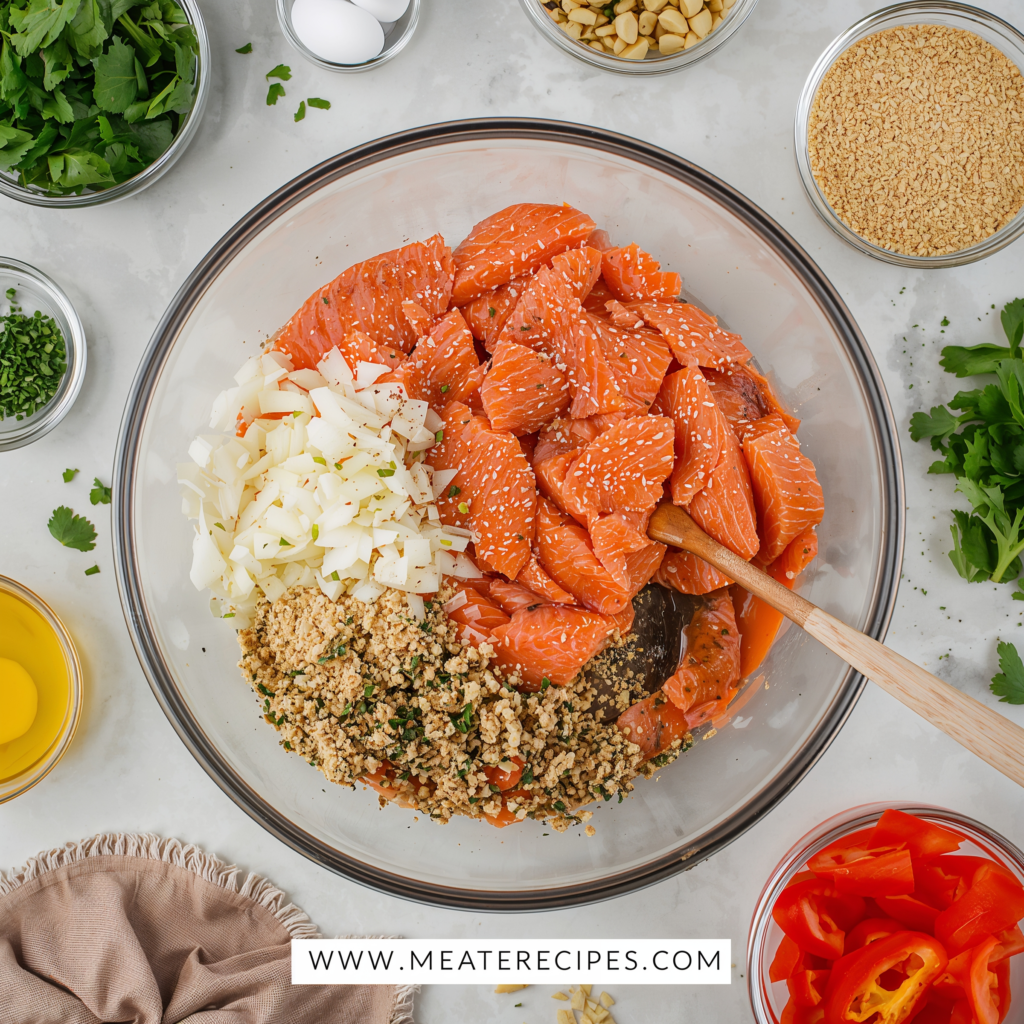
Now you start assembling the base mixture. In a large mixing bowl, add your flaked salmon, cooled sautéed vegetables, eggs, breadcrumbs or panko, garlic, herbs, and your chosen seasonings. You can start with a moderate amount of crumbs and adjust later if the mixture feels too wet.
Use a fork or your hands to combine everything gently. You want the ingredients to come together into a cohesive mixture without turning the salmon into a paste. If you notice that the mixture is loose and does not hold when you squeeze a small amount in your hand, add more breadcrumbs; if it seems crumbly and dry, you can mix in a little extra beaten egg or a spoonful of mayonnaise to improve binding.
Step 3 – Shape the Salmon Croquettes
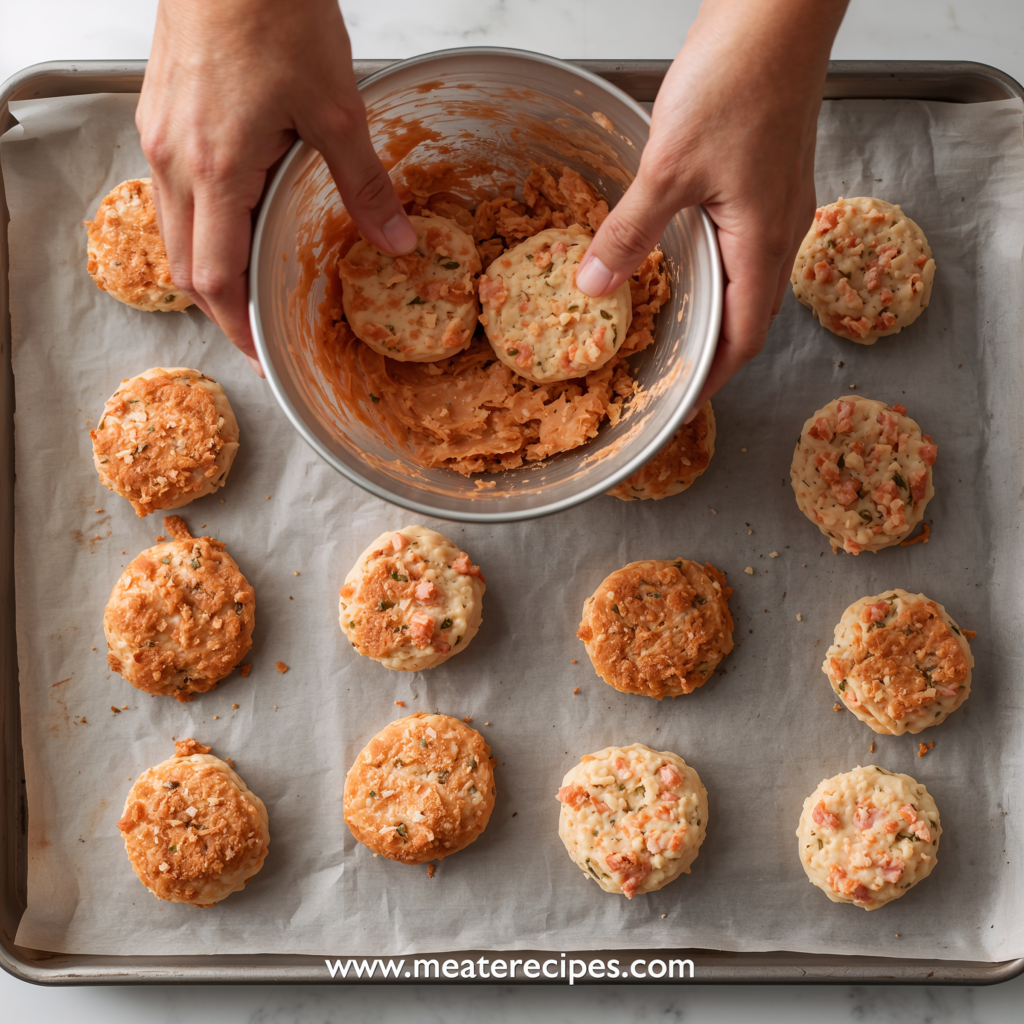
Once your mixture holds together, you are ready to shape your croquettes. Scoop out portions of the mixture—about 2 to 3 tablespoons each—and form them into compact patties or oval-shaped croquettes using your hands. Try to keep them all roughly the same size so they cook evenly in the pan.
For extra crunch, you can prepare a shallow dish with additional breadcrumbs or cornmeal and lightly coat each patty on the outside. This helps create a more pronounced crust once they hit the hot oil. Lay the shaped croquettes on a parchment-lined plate or tray as you work.
Step 4 – Chill the Mixture
Chilling is a small step that makes a big difference in how well your salmon croquettes hold their shape during cooking. Once all the patties are formed, place the tray in the refrigerator for at least 15–30 minutes. This rest time allows the breadcrumbs to hydrate and the mixture to firm up.
If you skip this step, your croquettes are more likely to break apart when you flip them or to spread out in the pan. Especially if your mixture is on the softer side, chilling gives you much more control and confidence when you move on to frying.
Step 5 – Pan-Fry the Salmon Croquettes
Heat and Cooking Time (H4)
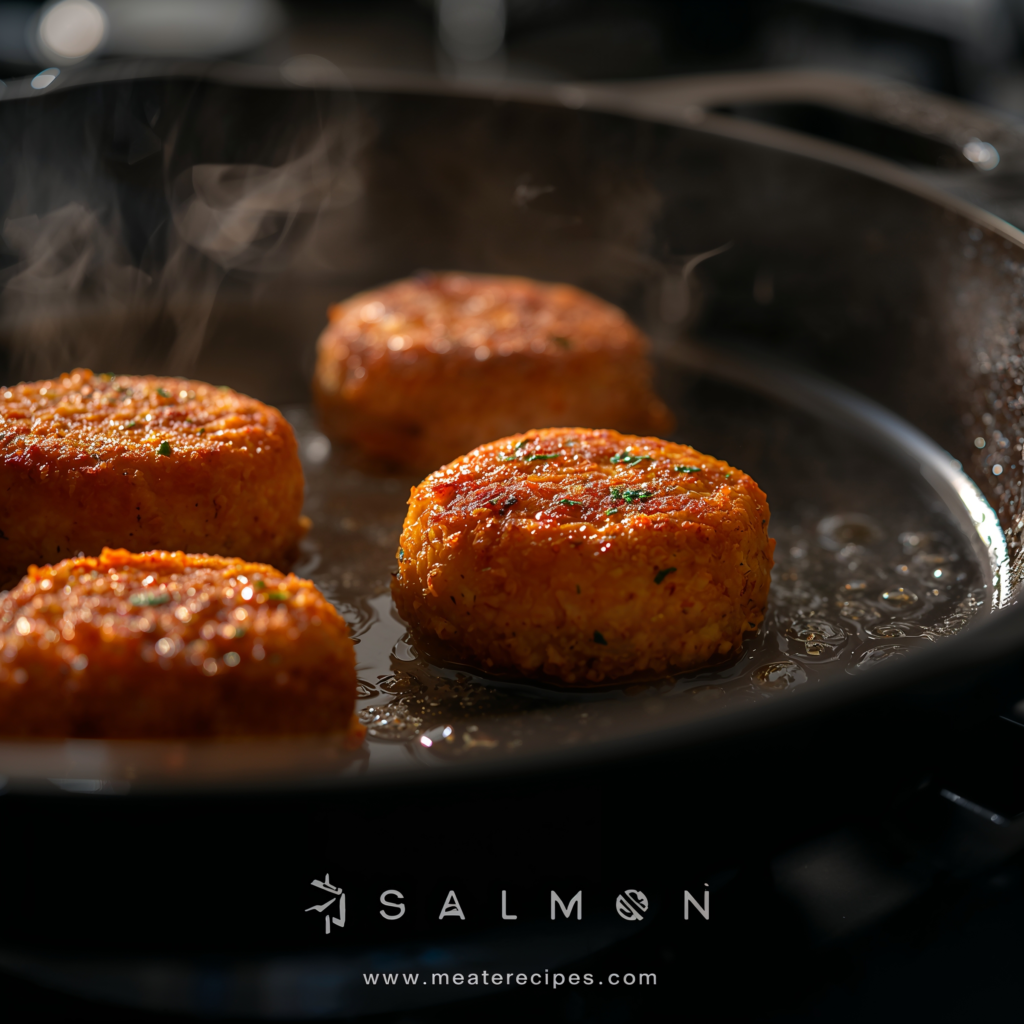
When you are ready to cook, add a thin, even layer of oil to a large skillet and warm it over medium to medium-high heat. You want the oil hot enough that a tiny crumb sizzles when it hits the pan, but not so hot that it smokes or burns instantly.
Carefully place the chilled croquettes into the pan in a single layer, leaving a little space between each piece. Avoid overcrowding the skillet, which can lower the oil temperature and make your croquettes greasy rather than crisp. Cook each side for about 3–4 minutes, or until the underside is deep golden brown and the patties feel firm enough to flip without falling apart.
Step 6 – Drain and Serve
As each batch finishes cooking, transfer the croquettes to a plate lined with paper towels to absorb any excess oil. This helps you keep the outside crunchy without feeling heavy. While they are still hot, you can sprinkle them with a light pinch of salt if needed.
You can serve your salmon croquettes immediately with lemon wedges and your favorite sauce—tartar sauce, remoulade, a spicy mayo, or even a simple squeeze of lemon and a dollop of yogurt sauce. They pair well with grits, salads, roasted vegetables, rice, or in soft buns as sandwiches.
Pro Tips for How to Make Salmon Croquettes Crispy and Moist
Texture and Binding Tricks
To keep your salmon croquettes from turning dense or rubbery, be mindful of how much you mix the ingredients. Once the mixture looks evenly combined and holds together when pressed, you can stop; overworking it can make the texture tough.
Getting the binding right is another key part of learning how to make salmon croquettes step by step. If you use too little egg and crumbs, the patties may crumble in the pan. If you use too much, they may taste breadier than you like. Start with the suggested amounts, then adjust gradually so the mixture feels moist but not wet, and holds its shape without cracking.
Flavor Boosters and Variations
You can easily put your own spin on this recipe with small changes. For a Southern or coastal flavor, you can season your mixture with Cajun spice or Old Bay seasoning and serve the croquettes with a tangy remoulade.
Fresh herbs like parsley or dill and a little lemon zest brighten the flavor and balance the richness of the salmon. If you prefer a lighter version, you can bake the croquettes in the oven or use an air fryer with a light spray of oil, adjusting the temperature and time to achieve a crisp exterior without deep frying.
Common Mistakes When Making Salmon Croquettes
Why Your Salmon Croquettes Fall Apart
One of the most common frustrations when you first try to make salmon croquettes is having them fall apart in the pan. This usually happens when there is not enough binding—meaning you need a bit more egg or breadcrumbs—or when the mixture is too wet from excess liquid in the salmon or vegetables.
Skipping the chilling step or trying to flip the croquettes too soon can also cause breakage. To prevent this, always drain your salmon well, add crumbs gradually until the mixture feels stable, chill the patties, and wait until the underside is nicely browned and firm before turning them over.
Avoiding Greasy or Dry Croquettes
If your croquettes come out greasy, it may be because the oil was not hot enough or the pan was overcrowded. When the oil is at the right temperature, the outside of the croquette starts to crisp quickly, forming a barrier that reduces how much oil can soak in. Cooking in smaller batches helps maintain that temperature.
Dry croquettes are often the result of overcooking or using very lean salmon without adding any extra moisture. To keep them moist, cook just until the patties are golden on both sides and heated through, and consider incorporating a spoonful of mayonnaise or yogurt into the mixture if your salmon feels dry.
Serving Ideas and What to Eat with Salmon Croquettes
Classic Side Dishes for Salmon Croquettes
Once you master how to make salmon croquettes step by step, you can build many different plates around them. For a Southern-style meal, you might serve them over creamy grits or alongside coleslaw and cornbread. For a more everyday dinner, potatoes, rice, or a simple green salad work beautifully

FAQ – How to Make Salmon Croquettes Step by Step
Frequently Asked Questions
What is the easiest way to learn how to make salmon croquettes step by step?
To make salmon croquettes step by step, you usually need flaked salmon (canned or cooked), egg, breadcrumbs or panko, finely chopped onion, optional bell pepper, garlic, herbs like parsley or dill, seasonings (salt, pepper, paprika, Cajun or Old Bay), and a little oil for pan-frying. These simple pantry ingredients come together to create a mixture that holds its shape and crisps beautifully in the skillet.
How do you keep salmon croquettes from falling apart?
To keep salmon croquettes from falling apart, you need enough binding (egg and breadcrumbs), a mixture that is not too wet, and a short chilling time before frying. Draining canned salmon well, adding crumbs gradually until the mixture holds when pressed, and refrigerating shaped patties for 15–30 minutes all help them stay intact in the pan.
Can you make salmon croquettes with fresh salmon instead of canned?
You can absolutely make salmon croquettes with fresh salmon as long as you cook it first, remove the skin and bones, and flake it before mixing. The step-by-step method is the same as with canned salmon, but you start from cooked fish instead of opening a can.
Are salmon croquettes healthy?
Salmon croquettes can be a nutritious choice because salmon provides protein and omega‑3 fats, but overall “healthiness” depends on how you cook them and what you add. Baking or air‑frying instead of deep‑frying, using a moderate amount of oil, and pairing them with vegetables or salads can make your salmon croquettes part of a balanced meal.
Can you bake salmon croquettes instead of frying them?
You can bake salmon croquettes on a parchment‑lined tray at around 400°F (200°C) for roughly 15–20 minutes, flipping once and brushing or spraying lightly with oil to encourage browning. The texture will be a bit different from pan‑fried croquettes, but you will still get a crisp exterior if you use enough heat and give them space on the tray.
Can you freeze salmon croquettes and reheat them later?
You can freeze salmon croquettes either after shaping them (before cooking) or after cooking and cooling them completely, then store them in an airtight container with parchment between layers. When you are ready to eat, thaw them in the fridge if possible, then reheat in the oven or on the stovetop until hot and crispy again, adding a few extra minutes if reheating from frozen.
Conclusion – Make Salmon Croquettes Part of Your Weekly Menu
When you understand how to make salmon croquettes step by step, you turn a simple, affordable ingredient into a dish that can fit breakfast, lunch, or dinner with very little effort. You now know how to choose between canned and fresh salmon, build a mixture that holds together, shape and chill the patties, cook them to a perfect golden crust, and serve or store them in ways that match your routine.
Your next move is simple: pick one evening this week, gather your ingredients, and follow the step‑by‑step method to make your first batch of salmon croquettes, then tweak the spices, herbs, and sauces until the recipe feels like it truly belongs in your kitchen. Share your favorite version with friends, family, or your online community and invite them to try your take on salmon croquettes so you start building a set of signature recipes you are proud of.
Now that you know how to make salmon croquettes step by step, you can turn simple salmon into a reliable, crowd‑pleasing meal any night of the week.