
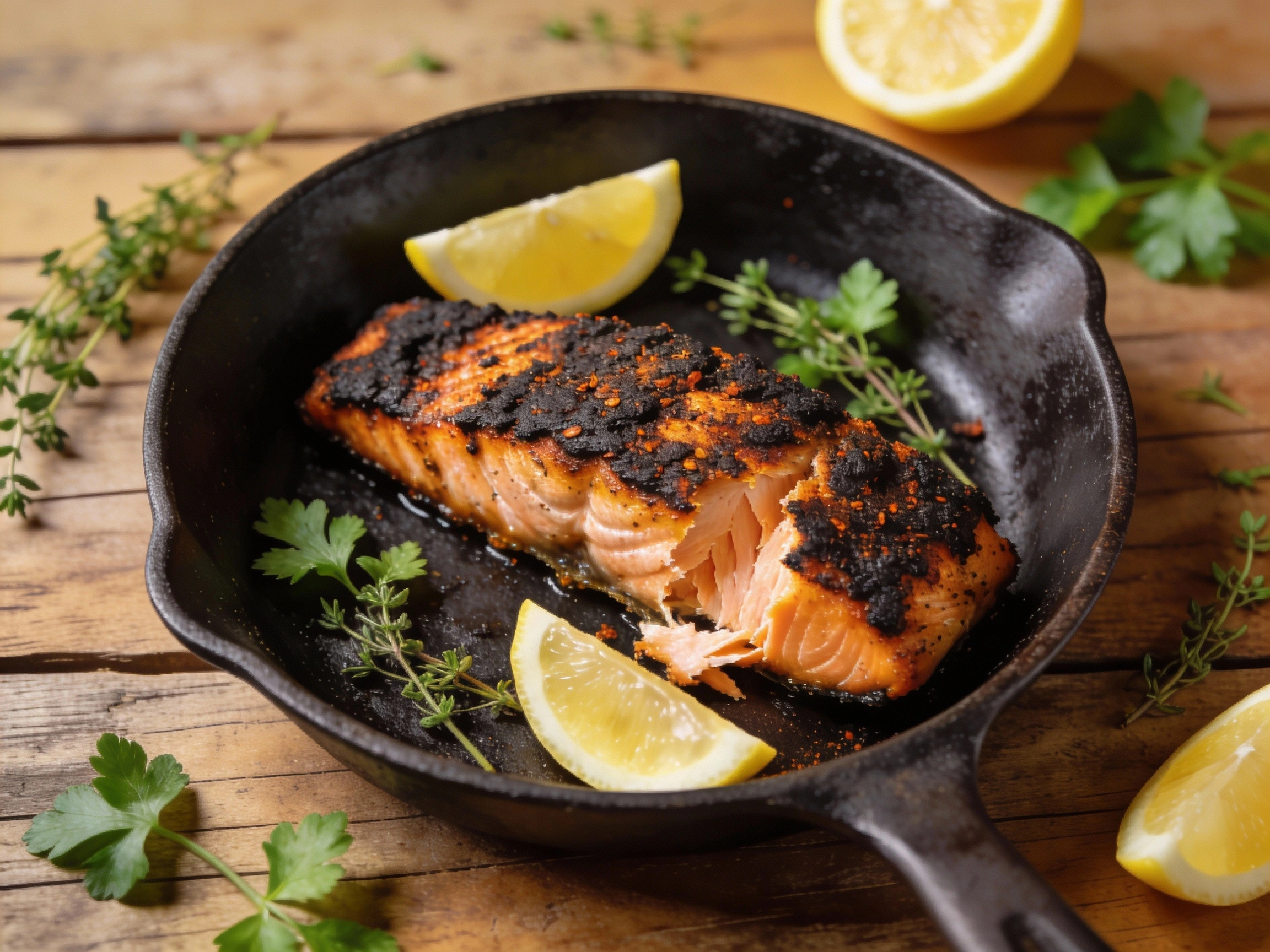
How do you make a recipe for blackened salmon?
You put a beautiful salmon fillet in the pan, hear the sizzle, see the color turning golden… and then you flip it and realize the spices burned or the fish turned dry. It feels frustrating, especially when salmon isn’t cheap and you wanted a dinner that actually feels special.
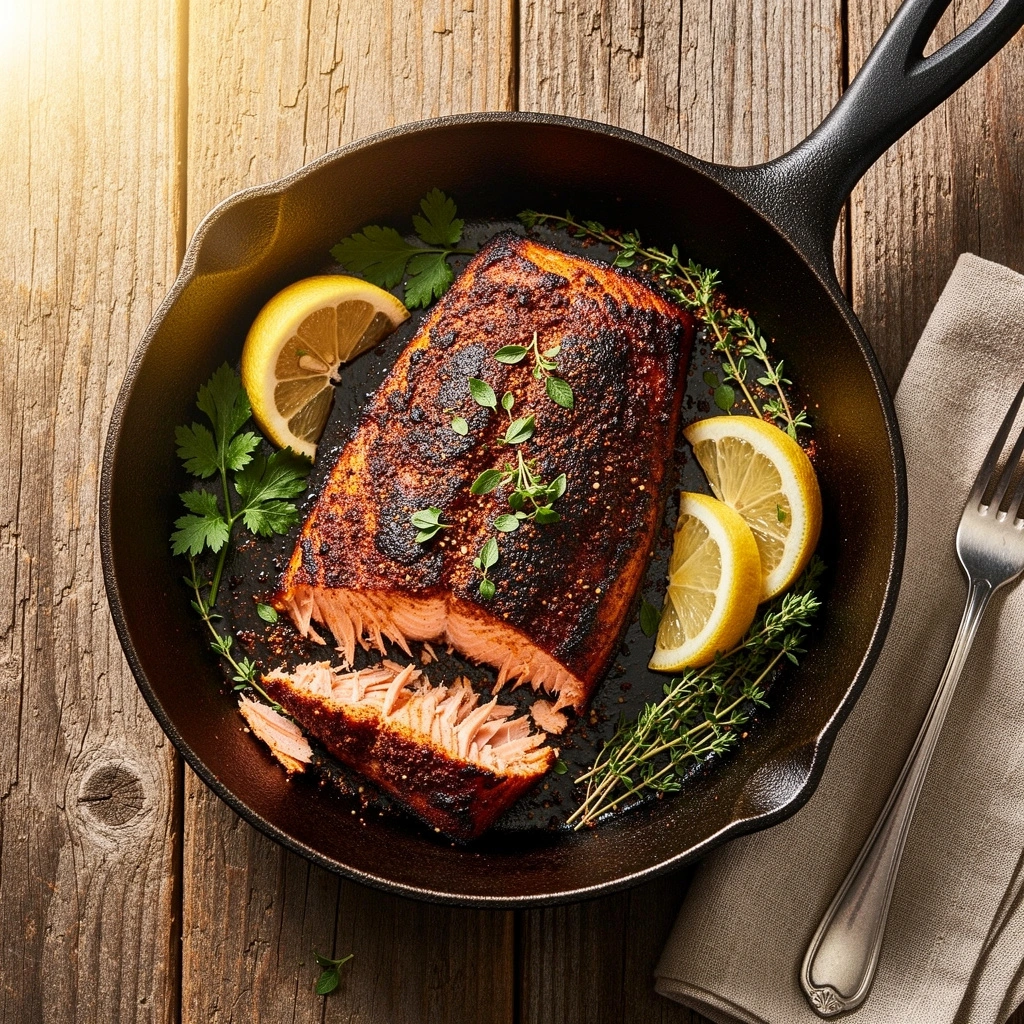
Learning how to make a reliable recipe for blackened salmon changes that completely. When you understand what “blackened” really means, how blackening seasoning works, and how to manage heat, you can get that dark, flavorful crust and still keep the inside moist and tender. In this guide, you’ll walk through everything step by step: the spice mix, the salmon prep, the cooking methods, and simple serving ideas so you know exactly what to do from fridge to plate.
If you enjoy bold seafood dishes like this recipe for blackened salmon, you’ll also love my best miso fish recipe ideas for healthy meals.
Table of Contents
What Is Blackened Salmon, Really?
What “Blackened” Means
Blackened salmon doesn’t mean burnt salmon. When you see a good recipe for blackened salmon, “blackened” refers to:
- A fillet coated in a bold Cajun‑style spice blend.
- Cooked over fairly high heat, usually in a heavy skillet.
- The spices and fat form a dark, almost charred crust that’s full of flavor.
The black color comes from the spices, butter or oil, and heat working together, not from completely burning the fish. That’s why blackened salmon can taste smoky, spicy, and rich without being bitter when you do it right.
Why Salmon Is Perfect for Blackening
Salmon’s natural richness makes it a great match for strong seasoning. You’re working with:
- A fatty, flavorful fish that can handle spice and smoke.
- Plenty of omega‑3s and protein, so your meal feels satisfying.
- A texture that stays tender if you don’t overcook it.
Bold seasoning plus a crisp crust and a juicy center is exactly what you’re aiming for with a well‑done blackened salmon recipe.
Key Elements of a Great Recipe for Blackened Salmon
Choosing the Right Salmon Fillets
To give your recipe the best chance of success, start with good salmon:
- Use fillets about 2–3 cm (around 1 inch) thick.
- You can use skin‑on or skinless; skin‑on is easier to flip and protects the flesh.
- Pat each fillet dry so the spice mix sticks and the crust crisps up.
If you can choose, wild salmon tends to have a stronger flavor, while farmed salmon is milder and fattier. Either works for blackened salmon as long as you adjust seasoning and cook time.
What Is Blackening Seasoning?
For any recipe for blackened salmon, blackening seasoning is the backbone. It’s a Cajun‑inspired spice mix that usually includes:
- Paprika (regular or smoked)
- Garlic powder and onion powder
- Cayenne pepper or chili powder for heat
- Dried thyme and oregano (or similar herbs)
- Salt and black pepper
- Sometimes a little brown sugar for a better crust
You can use a store‑bought Cajun or blackening blend if you want, but mixing your own lets you control salt and spice, which is especially helpful if you’re cooking for kids or anyone sensitive to heat.
Recipe for Blackened Salmon – Ingredients and Homemade Spice Mix
Main Ingredients for Blackened Salmon
Salmon Ingredient Table
| Ingredient | Amount (example) | Notes |
|---|---|---|
| Salmon fillets | 4 fillets, 5–6 oz each | Skin-on or skinless, about 1 inch thick |
| Butter or oil | 2–3 tbsp | Butter = more flavor, oil = higher smoke point |
| Lemon wedges | For serving | Brightens the final dish |
Most popular blackened salmon recipes follow this basic structure: fillets, fat, and a bold seasoning.
Homemade Blackening Seasoning for Salmon
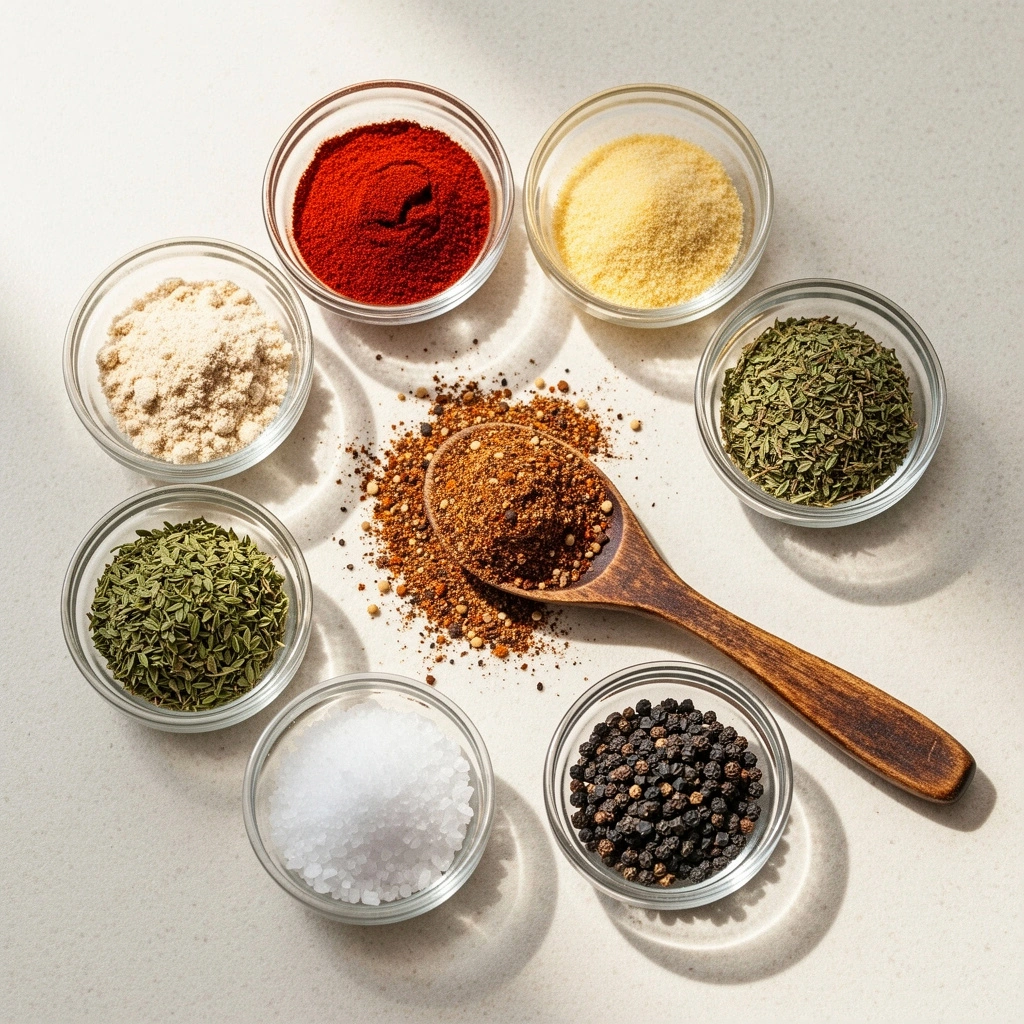
H4: Blackening Spice Mix Table
| Spice | Amount (example) | Role in flavor |
|---|---|---|
| Paprika (smoked or sweet) | 2 tbsp | Base flavor and color |
| Brown sugar (optional) | 1–2 tsp | Light sweetness, helps the crust caramelize |
| Garlic powder | 1 tsp | Savory depth |
| Onion powder | 1 tsp | Extra umami and aroma |
| Cayenne pepper | ¼–1 tsp | Heat; increase or reduce based on your taste |
| Dried thyme | ½ tsp | Herbal note |
| Dried oregano or basil | ½ tsp | Extra herb complexity |
| Salt | 1–1½ tsp | Essential seasoning |
| Black pepper | 1 tsp | Gentle heat and balance |
This kind of mix lines up closely with well‑rated blackened salmon and blackening seasoning recipes from trusted cooking sites, but you have the freedom to tweak it.
How Do You Make a Recipe for Blackened Salmon? Step-by-Step
Step 1 – Prep Your Salmon Properly
Before any spice touches the fish, a bit of prep makes a big difference:
- Take the fillets out of the fridge and let them sit at room temperature for about 15–20 minutes. This helps them cook more evenly.
- Pat each fillet completely dry with paper towels. Moisture on the surface will fight the crust you’re trying to build.
- Check for pin bones by running your fingers along the fillet and pulling out any you find.
When your salmon is dry and at near room temperature, your blackened salmon recipe is already off to a better start.
Step 2 – Mix Your Blackening Seasoning
In a small bowl:
- Combine all the spices from the table.
- Stir them thoroughly so you don’t get pockets of extra salt or cayenne.
You can double or triple this recipe and store the extra seasoning in an airtight jar. That way, you have your own ready‑to‑go blackened seasoning for quick weeknight salmon.
Step 3 – Coat the Salmon with the Spice Mix
Now you’re going to turn plain fillets into blackened salmon:
- Lightly brush the flesh side of each fillet (the side without skin) with melted butter or oil. This helps your blackened seasoning stick.
- Sprinkle the blackening seasoning generously over the flesh side and press it gently so it adheres.
- If your fillets have skin, you can leave the skin side mostly unseasoned or use a light dusting so it doesn’t burn as easily.
You want a full, even coating—a solid layer of spices—but not so thick that it forms clumps.
Step 4 – Cook the Blackened Salmon in a Skillet
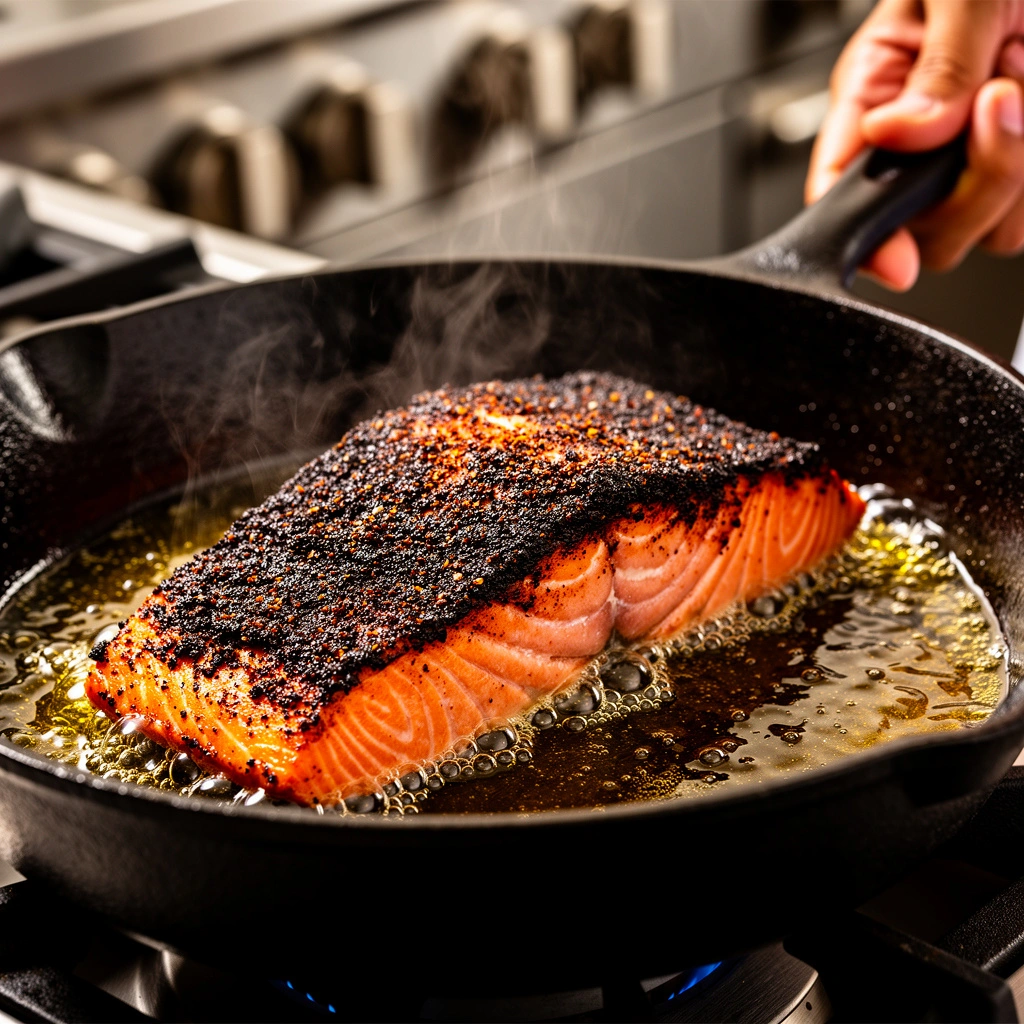
Most classic recipes for blackened salmon use a skillet on the stovetop, usually cast iron.
Watch: Easy Recipe for Blackened Salmon (Step-by-Step)
Stovetop Blackened Salmon Instructions
Here’s how you cook it:
- Preheat the pan
- Add fat
- Sear the first side
- Flip and finish cooking
- Gently flip each fillet using a fish spatula or thin spatula.
- Reduce the heat to medium so the spices don’t burn while the inside finishes cooking.
- Cook the skin side (or second side) for another 3–6 minutes, depending on thickness, until the salmon is just opaque and flakes easily with a fork.
- Aim for an internal temperature of about 125–135°F (52–57°C) if you like your salmon moist and slightly medium in the center.
- Rest and serve
- Transfer the salmon to a plate and let it rest for a few minutes.
- Squeeze fresh lemon juice over the top right before serving.
Be prepared for some smoke; blackening always creates more than gentle sautéing, so open a window or use your hood fan.
Step 5 – Oven or Air Fryer Options
If you prefer less smoke or a more hands‑off method, you can still use a similar recipe for blackened salmon in the oven or air fryer.
Oven-Baked Blackened Salmon
- Preheat your oven to about 400°F (200°C).
- Place your seasoned salmon fillets on a parchment‑lined or lightly oiled baking sheet.
- Bake for about 10–15 minutes, depending on fillet thickness, until the salmon is done.
- For more of a blackened crust, switch to broil (grill) for the last 1–2 minutes—but watch closely to avoid burning.
This approach gives you a bit less intense crust than the skillet, but it’s easier on your kitchen and still delivers plenty of flavor.
Air Fryer Blackened Salmon
- Preheat the air fryer to 370–390°F (about 190–200°C).
- Spray or lightly oil the basket so the salmon doesn’t stick.
- Arrange the seasoned fillets in a single layer.
- Cook for about 8–12 minutes, depending on the size, until the salmon flakes easily and the crust looks dark and crisp.
This is a good option for quick weeknight meals with minimal cleanup.
Serving Your Blackened Salmon
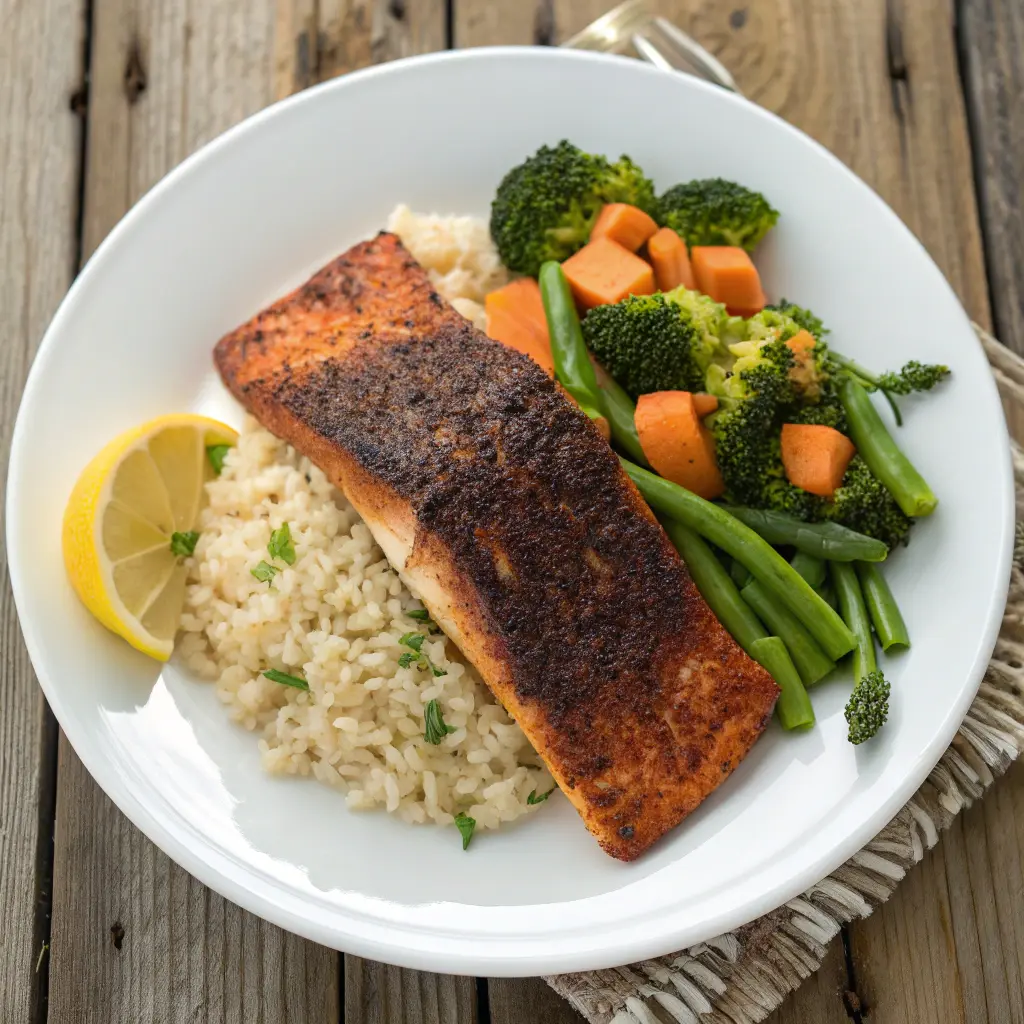
Best Side Dishes for Blackened Salmon
Because blackened salmon is bold and spicy, sides that cool and balance it work especially well. Popular choices include:
- Light vegetables:
- Starches to soak up heat:
- Rice, quinoa, or couscous.
- Mashed or roasted potatoes.
You can also turn your recipe for blackened salmon into:
- A bowl (over grains and veggies).
- Tacos (with slaw and lime crema).
- A salad topper (flaked over mixed greens).
Simple Sauces That Pair Well
You don’t need a heavy sauce; a little goes a long way with blackened salmon:
- Fresh lemon or lime juice—almost essential.
- Yogurt or sour cream sauce with garlic and lemon for a cooling contrast.
- A light lemon‑butter sauce if you want something richer.
These finishing touches soften the spice and brighten every bite.
Tips, Mistakes, and Variations for Blackened Salmon
Common Mistakes to Avoid
When you’re learning how to make a recipe for blackened salmon, these are the pitfalls to watch out for:
- Heat too low
- Heat too high with no control
- The crust burns before the salmon cooks, leaving you with a bitter taste.
- Too much sugar in the seasoning on very high heat
Adjusting your burner and paying attention to the first batch will teach you quickly where your perfect “blackening” zone is.
Adjusting Spice Level
Your recipe for blackened salmon doesn’t have to be fiery unless you want it to be.
- To make it milder:
- To make it hotter:
Making the Recipe Lighter or Richer
You can steer this same recipe for blackened salmon toward lighter or more indulgent versions:
- For a lighter version:
- Use a neutral oil or avocado oil instead of lots of butter.
- Skip the brown sugar or reduce it.
- For a richer version:
The core technique stays the same; you just adjust the fat and toppings to match your goals.
FAQ – How Do You Make a Recipe for Blackened Salmon?
What is the basic recipe for blackened salmon?
The basic recipe for blackened salmon is simple:
- Make a blackening seasoning with paprika, garlic powder, onion powder, cayenne, dried thyme and oregano, salt, and pepper.
- Coat dried salmon fillets in butter or oil, then in the seasoning.
- Cook them in a hot skillet until a dark crust forms and the inside is just cooked through and flaky.
How do you make a recipe for blackened salmon less spicy?
To keep the flavor but reduce the heat:
- Cut the cayenne down to a pinch or leave it out.
- Use more paprika and herbs so you still have a full‑bodied crust.
You still get the blackened look and taste, just without a strong burn.
Can you bake a recipe for blackened salmon instead of pan-searing?
Yes, you can:
- Season the salmon exactly the same way.
- Bake at about 400°F (200°C) until the salmon is cooked.
- Finish with a quick broil to deepen the crust if needed.
Baked blackened salmon makes less smoke and requires less hands‑on time.
What pan is best for blackened salmon?
A cast iron skillet is often recommended for blackened salmon because:
- It holds high heat well.
- It helps you get a good sear and crust.
Any heavy‑bottomed skillet can work, though, as long as you preheat it properly and control the heat.
How do you know when blackened salmon is done?
You can tell your blackened salmon is ready when:
- It flakes easily when you gently press with a fork.
- The center looks just opaque, not translucent.
- The internal temperature is around 125–135°F (52–57°C), if you’re using a thermometer.
Resting your salmon for a couple of minutes after cooking helps the juices redistribute.
Conclusion – Make Blackened Salmon Your Signature Dish
Once you understand the process, a good recipe for blackened salmon becomes less of a gamble and more of a reliable go‑to. You know what blackening seasoning is, how to prep the fish, how hot your pan needs to be, and how to avoid burning the spices or drying out the salmon. With that foundation, you can change the heat level, swap in different herbs, or shift from skillet to oven or air fryer without losing what makes blackened salmon so satisfying.
If you want to put this into practice right away:
- Save the spice mix table and the step‑by‑step method.
- Pick one method—skillet, oven, or air fryer—and try it this week.
- After you taste it, adjust the cayenne, sugar, and fat the next time until it matches exactly what you and your family like.
Once you dial it in, share your own twist on this recipe for blackened salmon with your readers or followers—maybe your version uses a little extra smoked paprika, or you serve it over a particular salad or grain bowl. Your experience and feedback can help someone else finally get that perfect blackened crust at home instead of only ordering it at restaurants.